

BMW Malfunction Repair in Abu Dhabi
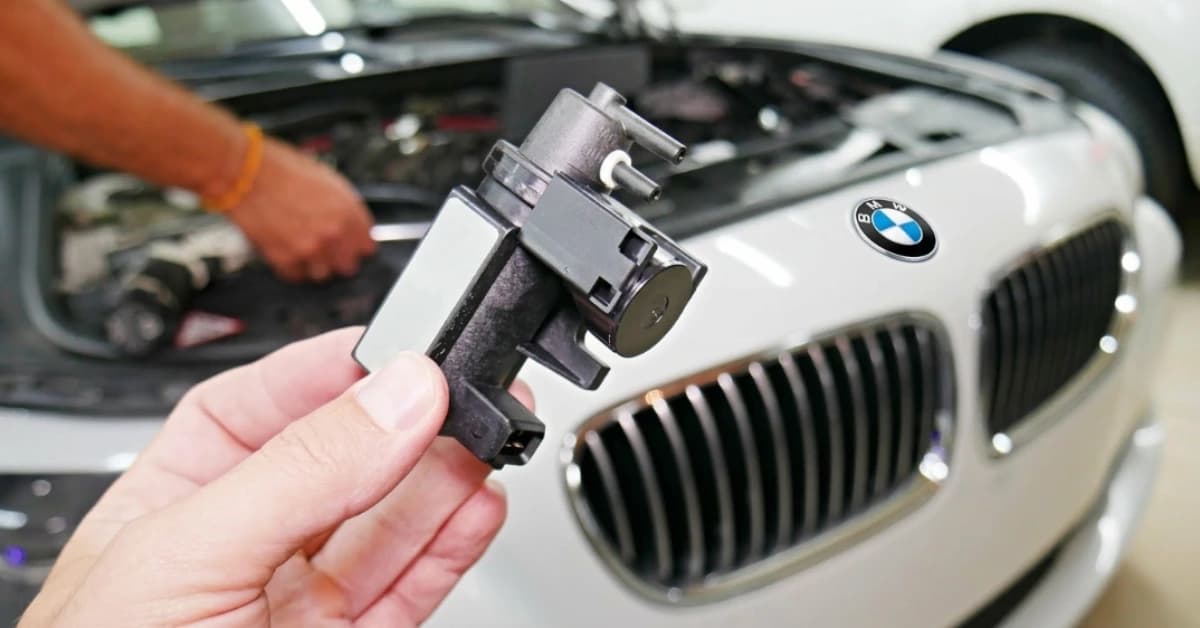
Exotic Auto Services delivers complete BMW malfunction repair in Abu Dhabi, covering ECU fault diagnostics, sensor replacement, emissions system repair, and drivetrain fault resolution by certified technicians using OEM-grade components and manufacturer-approved procedures.
- 10+ Years of Experience
- 100% Satisfied Clients
- 24/7 Pickup & Delivery Service
- 2x Quick Service
10,000+
Vehicles serviced
12
Service categories, one roof
12-Month
Warranty on parts & labour
25–40%
Below dealer pricing
Exotic Auto Services
Why Choose Exotic Auto Services for BMW Malfunction Repair in Abu Dhabi?
Certified BMW Malfunction System Technicians
Technicians carry manufacturer-level certifications covering BMW fault architecture across the 1 Series, 3 Series, 5 Series, 7 Series, X3, X5, and M-series platforms. Fault voltage deviation as low as 0.05 V is detected using BMW-calibrated oscilloscope equipment.
Genuine OEM Fault Repair Parts & Specialist Equipment
Only OEM-approved oxygen sensors, MAF sensors, crankshaft position sensors, throttle bodies, injectors, NOx sensors, and control modules are used. The workshop operates BMW-specific ISTA/D and ISTA/P diagnostic platforms.
Efficient Malfunction Service Turnaround
A standard oxygen sensor replacement or throttle body adaptation takes 1 to 2 hours. An EVAP system fault repair or MAF sensor replacement is completed within 2 to 3 hours. A comprehensive overhaul takes 4 to 6 hours.
Clear and Consistent Pricing
All malfunction repair costs are confirmed before work begins. A written service report listing all replaced components, fault code clearance records, and emissions test results is provided at handover.
What's included
BMW Malfunction Repair Services We Provide
Malfunction Indicator Light (MIL) Diagnostic & Fault Code Analysis
BMW ISTA scan tools retrieve active and stored DTCs from all control modules while live data analysis identifies whether the MIL originates from sensor deviation, fuel trim error, misfire, or emissions component failure.
Engine Misfire Diagnosis & Ignition System Repair
ISTA misfire counters identify the specific cylinder and firing event within a 200-rpm window. Worn ignition coils, spark plugs, or injectors are identified and replaced with OEM-matched components.
Mass Airflow (MAF) Sensor Replacement & Adaptation
Long-term fuel trim values above +10% or below -10% confirm sensor signal deviation. Replacement MAF sensors are installed and adapted using ISTA coding.
Oxygen (Lambda) Sensor Replacement & Exhaust System Diagnosis
A degraded upstream sensor with a response time above 100 ms disrupts closed-loop fuel correction. Sensors are replaced with OEM wideband units and confirmed using ISTA live data.
Catalytic Converter Inspection & Replacement
BMW catalytic converters reach end-of-life when oxygen storage capacity drops below 15% of the original design value, triggering a P0420 or P0430 fault code.
EVAP System Leak Detection & Purge Valve Repair
Leaks as small as 0.5 mm in diameter trigger a small leak DTC. A smoke machine test identifies the exact leak point, and purge valves and canister vent solenoids are replaced as OEM components.
Throttle Body Cleaning & Adaptation Reset
Carbon accumulation restricts airflow below the idle control target, producing rough idle. After cleaning, an ISTA throttle body adaptation procedure resets the minimum and full-load stop values.
Fuel Injector Cleaning, Testing & Replacement
Injectors with flow deviation above 5% or spray angle misalignment above 10° produce cylinder-specific fuel trim errors, addressed via ultrasonic cleaning or OEM-matched replacement.
NOx Sensor & SCR System Repair (Diesel Models)
A faulty NOx sensor with output deviation above 50 ppm from the reference value triggers an SCR system fault and activates a torque reduction mode.
DPF (Diesel Particulate Filter) Regeneration & Replacement
ISTA forced regeneration is performed for units with soot loads between 45% and 75%. Filters with irreversible blockage are replaced with OEM DPF assemblies.
EGR Valve Cleaning & Replacement
Carbon deposits restricting EGR valve travel to less than 70% of maximum lift produce a rough idle, increased NOx emissions, and a stored valve position fault.
Turbocharger Fault Diagnosis & Boost Pressure Repair
A wastegate actuator fault or boost pressure sensor deviation above ±0.15 bar triggers an underboost or overboost DTC and activates a reduced-power mode.
How it works
How to Book
Share Your BMW Details
Provide your BMW model, model year, current mileage, fuel type, and a description of any warning lights or performance symptoms you have noticed.
Make a Booking
Choose a date and time that fits your schedule. Same-day and next-day appointments are available. A free pickup and delivery service covers all areas of Abu Dhabi.
We Repair
Certified technicians carry out the complete malfunction repair and provide a written inspection report at job completion.
25–40%
Below dealer pricing
12-Month
Warranty on parts & labour
10,000+
Vehicles serviced
Signs to watch for
When Does Your BMW Need Professional Malfunction Repair?
| Issue | Symptoms / Signs | Possible Cause | Recommended Solution |
|---|---|---|---|
| Check Engine / MIL Active | Yellow or red engine fault indicator on the iDrive cluster; fault message displayed | Oxygen sensor failure; misfire event; EVAP leak; catalyst degradation | ISTA full DTC scan, sensor output test, OBD readiness monitor review, and OEM component replacement |
| Rough Idle or Hesitation | The engine stumbles at idle below 700 rpm or hesitates during acceleration above 2,000 rpm | Carbon-restricted throttle body; misfire in one cylinder; MAF signal deviation | Throttle body cleaning and adaptation, ignition coil resistance test, MAF live data analysis |
| Reduced Power Mode | Instrument cluster displays a reduced power warning; engine output is limited to below 60% | Overboost fault above 2.0 bar; EGR valve restriction; DME internal fault | Boost pressure live data check, EGR flow test, ECM CAN communication fault review |
| Excessive Fuel Consumption | Fuel economy drops more than 15% below the rated figure without a change in driving pattern | Degraded lambda sensor; stuck-open thermostat below 80°C; injector flow deviation above 5% | Lambda sensor switching frequency test, CTS temperature live data, injector flow balance test |
| Black or Blue Exhaust Smoke | Visible smoke from the exhaust at idle or under load; strong fuel or oil odour | Rich fuel mixture above λ 0.85; worn valve stem seals; injector over-fuelling | Fuel trim analysis, cylinder compression test, injector pulse width measurement |
| DPF Warning Light | DPF regeneration failure message; soot load indicator above 75% | Short journey cycle below 15 km, preventing passive regeneration; faulty DPF temperature sensor | ISTA forced DPF regeneration, DPF soot load read, and temperature sensor output check |
| AdBlue / SCR Warning | SCR system fault message; NOx warning with countdown to engine lock | Degraded NOx sensor above 50 ppm deviation; AdBlue pump fault; SCR catalyst failure | NOx sensor replacement, AdBlue dosing system pressure test, SCR catalyst efficiency test |
| Transmission Fault | Gear change hesitation; transmission warning light active; limp mode engaged | EGS module CAN fault; solenoid response deviation; fluid temperature above 130°C | ISTA EGS DTC scan, solenoid resistance test, transmission fluid temperature and condition review |
Why it matters
Benefits of Professional BMW Malfunction Servicing
| Benefit | Description | Impact |
|---|---|---|
| Restored Engine Performance | Replacement of degraded sensors, injectors, and ignition components returns combustion efficiency to specification | Correct fuel trim within ±5% LTFT eliminates hesitation and restores rated power output |
| Improved Emissions Compliance | Repaired catalyst, lambda sensors, and EGR components maintain exhaust outputs within Euro 6 NOx and HC limits | Verified OBD readiness monitors confirm compliance before the next UAE roadworthiness inspection |
| Extended Engine Component Life | Addressing misfire, fuel trim deviation, and EVAP leaks early prevents progressive carbon accumulation and injector fouling | Early repair reduces internal wear and lowers the probability of requiring a full cylinder head service |
| Accurate Fuel Delivery | Correct MAF, injector, and throttle body operation maintains stoichiometric fuelling under all load conditions | Proper air-fuel ratio reduces carbon deposit formation and maintains rated fuel economy within 5% |
| Reduced Long-Term Repair Costs | Resolving a faulty oxygen sensor or NOx sensor early prevents catalyst damage and SCR system failure | Replacing a single sensor costs significantly less than a full catalytic converter or DPF assembly replacement |
| Verified System Readiness | Post-repair OBD monitor completion confirms all emissions and engine management systems are operating correctly | Complete monitor readiness prevents unplanned MIL activation during normal driving |
| Compliance with BMW Service Standards | Full malfunction repair records using OEM parts preserve manufacturer warranty validity | Complete service documentation supports resale value and confirms verified engine performance to future buyers |
Aftercare
Maintenance Tips After BMW Malfunction Repair
- Allow the DME Adaptive Values to Stabilise Over the First 300 km: Avoid wide-open-throttle acceleration during the first 300 km after ECM module replacement or throttle body adaptation reset.
- Check Engine Oil Level Weekly for the First Month: Monitor oil consumption for four weeks after any repair involving valve stem seals or turbocharger oil lines.
- Inspect Air Filter Condition Every 15,000 km: A clogged air filter raises intake restriction, disrupting MAF sensor readings.
- Perform DPF-Friendly Drive Cycles After a Forced Regeneration: Complete at least two motorway journeys above 60 km/h lasting more than 20 minutes within the first week.
- Verify AdBlue Level at Every Fuel Stop on Diesel Models: Running the tank below 2 litres risks SCR pump cavitation.
- Schedule an OBD Readiness Check at 2,000 km Post-Repair: This confirms that all emissions monitors remain in a complete status after normal driving.
Verified reviews
What Our Customers Say
Real reviews from BMW owners in Abu Dhabi who have had bmw malfunction repair in abu dhabi completed at Exotic Auto Services.
Fleet coverage
BMW Models We Service in Abu Dhabi

Questions, answered
Frequently Asked Questions
A standard malfunction repair covers BMW ISTA DTC scanning across all control modules, MAF sensor output check, lambda sensor response time test, fuel trim analysis, ignition misfire counter review, EVAP pressure test, and DPF soot load reading.
Sensor replacement is appropriate when a single input circuit shows deviation outside OEM specifications. Module replacement is required when internal memory faults or CAN communication errors are confirmed during ISTA diagnosis.
A single sensor replacement or throttle body adaptation takes 1 to 2 hours. An EVAP leak repair or MAF replacement takes 2 to 3 hours. A comprehensive repair takes 4 to 6 hours.
Clearing a DTC without addressing the underlying fault results in the MIL reactivating within one to three drive cycles. All fault codes are cleared only after the physical repair is complete.
Yes. DPF units with soot load above 75% undergo forced regeneration, and units with irreversible ash blockage above 85% capacity are replaced with OEM assemblies.
Reduced power mode is triggered by overboost above 2.0 bar, EGR valve restriction, a crankshaft sensor signal deviation above ±3°, or a transmission module CAN communication error.
Spark plugs and ignition coil resistance should be checked every 30,000 km. Oxygen and MAF sensors should be tested every 60,000 km or when fuel trim deviation exceeds ±8%.
Yes. All DTCs stored in the DME, EGS, SCR, or body control modules are cleared using ISTA software only after the physical fault is repaired and post-repair data confirms correct operation.
Visit the workshop
Book Your BMW Service Today
Walk-in appointments and same-day service are available at the dedicated BMW specialist facility in Musaffah, Abu Dhabi.
- Hours
- Mon–Sat: 9:00 AM–10:00 PM · Sun: 9:00 AM–7:00 PM