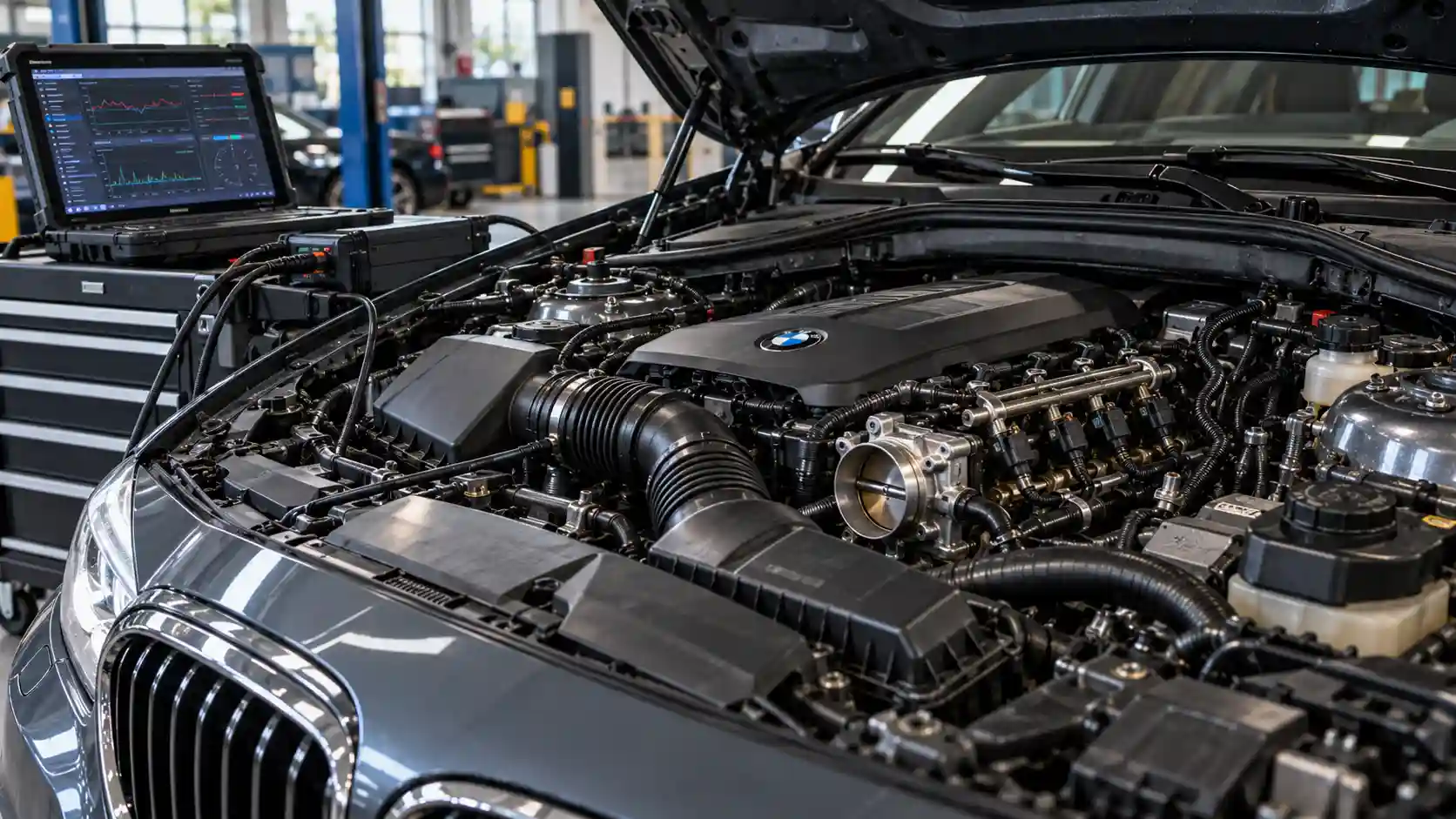


A BMW can handle long drives and high speeds, but slow traffic in Abu Dhabi can put extra pressure on its cooling system. When outdoor temperatures rise and cars spend more time standing in traffic, the engine needs a healthy cooling system to stay within its normal temperature range. Even a small fault can lead to overheating.
Check control · Quick diagnosis
Your BMW may overheat in Abu Dhabi traffic because of a weak cooling fan, low coolant, a faulty water pump, or a blocked radiator.
A broken thermostat can stop coolant from moving through the engine as it should. Coolant leaks, a damaged radiator cap, or air trapped in the cooling system can cause similar problems. Finding the real cause early can help prevent costly engine damage.
Reasons Why Does a BMW Overheat in Abu Dhabi Traffic
When your BMW moves at a steady speed, air flows through the radiator and helps carry heat away from the engine coolant. In slow traffic, natural airflow drops, so the cooling fan must do more work. If the fan, radiator, or coolant system is not working properly, engine temperature can rise.
Abu Dhabi's hot weather adds to this pressure because the cooling system has less difference between the outside air temperature and the heat it needs to remove. A healthy system should still control engine temperature in normal traffic. Repeated overheating is a sign that something needs checking.
Inspect
Traffic Affects Engine Temperature
Stop-and-go driving makes the engine work through repeated periods of idling and acceleration. The air conditioning system adds heat to the area in front of the radiator, which can make cooling more demanding. If the cooling fan is weak or the radiator is dirty, heat may build up while the car is moving slowly.
You may notice that the temperature rises in traffic but returns to normal once you start driving on an open road. This pattern can point to poor airflow, although a technician should check other cooling system faults before deciding on a repair.
Inspect
Low Coolant Level or a Coolant Leak
Coolant absorbs heat from the engine and carries it to the radiator, where the heat is released. If the coolant level drops, the system may not remove heat properly. This is one of the common reasons a BMW may overheat while driving through Abu Dhabi.
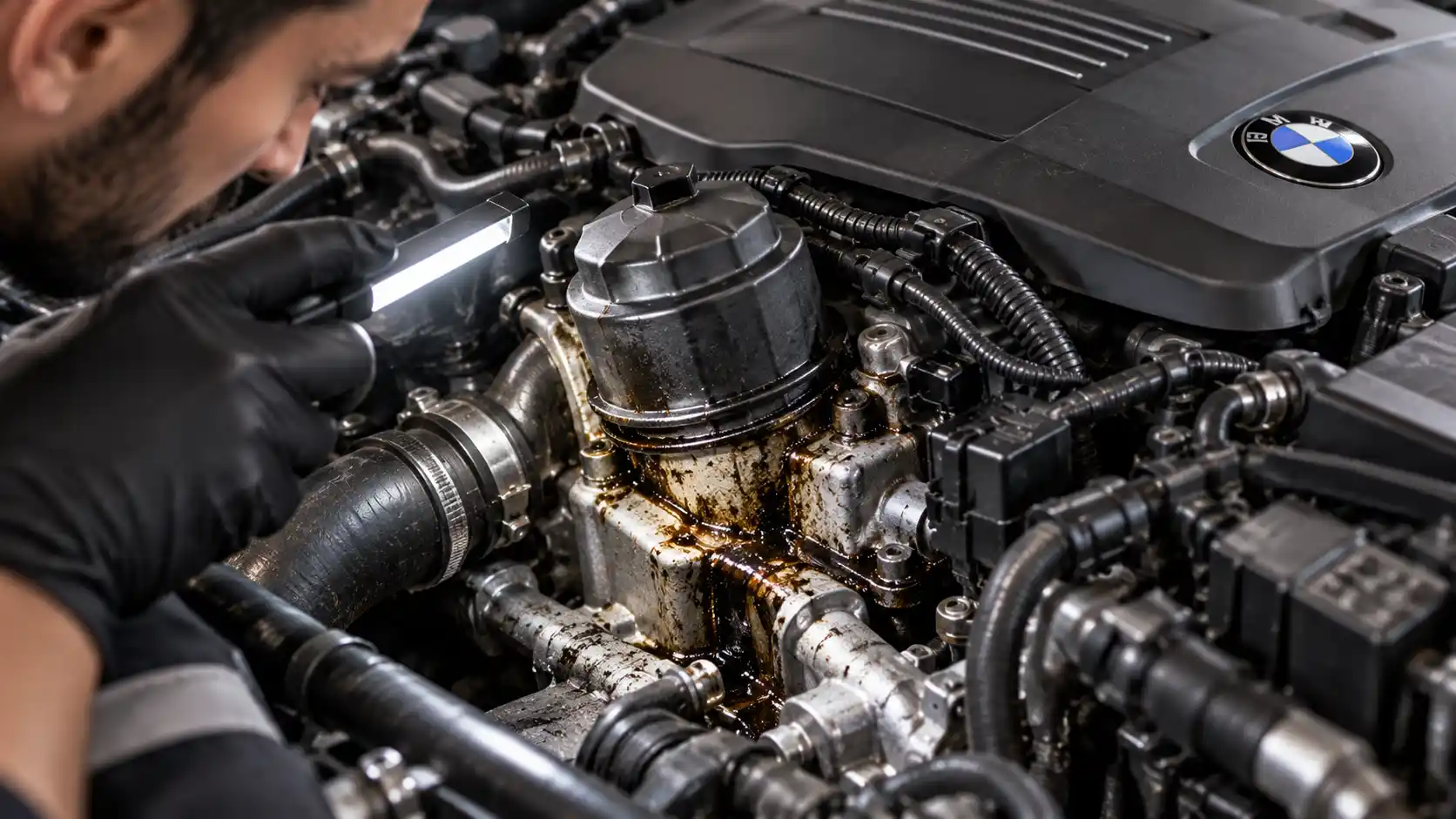
Coolant can escape through cracked hoses, loose connections, a damaged expansion tank, a leaking radiator, or a faulty water pump seal. Some leaks leave clear puddles under the car, while others may only appear when the system is hot and under pressure.
Signs of a Coolant Leak
Look for these warning signs:
- A low coolant warning on the dashboard.
- Blue, green, pink, or other coloured fluid under the car, depending on the coolant used.
- A sweet smell near the engine.
- Steam coming from under the bonnet.
- Coolant that needs topping up again and again.
The coolant colour alone cannot confirm the source of a leak. Some leaks may leave little visible evidence, so a pressure test can help locate the problem.
How to Fix Low Coolant Problems
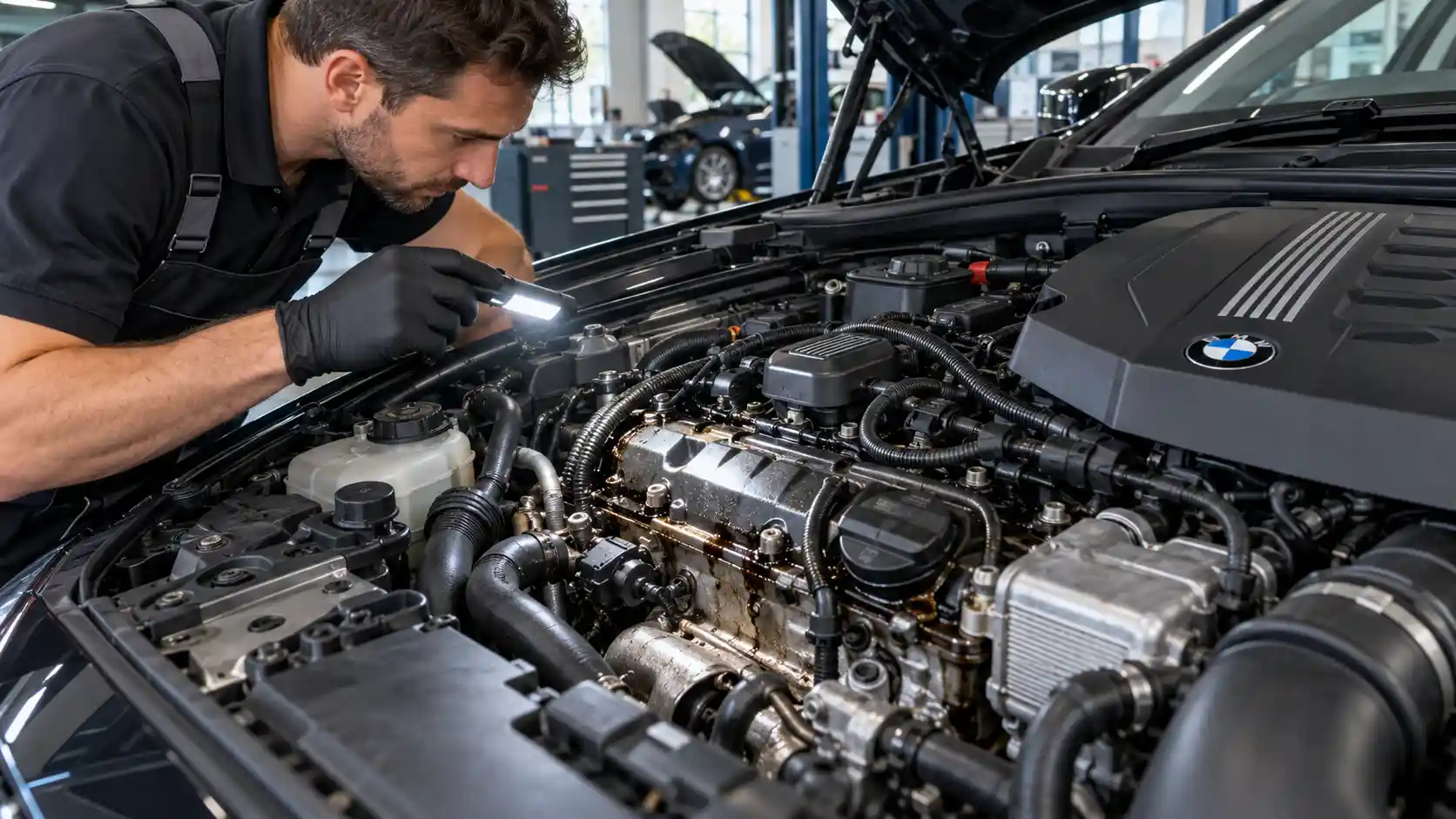
A technician should check the expansion tank, radiator, hoses, water pump, and other joints for leaks. A cooling system pressure test can help find leaks without waiting for the engine to overheat again. If coolant loss continues with no visible leak, the workshop may need to check for an internal engine leak.
Safety firstNever open the coolant tank while the engine is hot. The system is pressurised, and hot coolant can cause severe burns. Use only the coolant type approved for your BMW and avoid treating repeated top-ups as a long-term fix.
Inspect
A Faulty BMW Cooling Fan
The cooling fan helps pull or push air through the radiator when natural airflow is low. It is especially important when your BMW is idling at traffic lights or moving slowly through busy roads. If the fan motor fails, its control unit develops a fault, or the wiring is damaged, the radiator may not receive enough airflow to remove engine heat.
This can explain why a BMW stays at a normal temperature on an open road but begins to overheat in traffic. However, a weak fan is only one possible cause, so other cooling parts should be checked as well.
Common Signs of a Cooling Fan Fault
Your BMW may show a rising temperature while standing still, even though the temperature drops once the car moves faster. The AC may also become less effective when the car is stationary because the condenser is not getting enough airflow.
Depending on the model, the fan may run at different speeds under electronic control. A technician can use a diagnostic scanner and suitable tests to check fan operation, electrical supply, wiring, and control signals. Replacing the fan without testing these parts may not solve the issue.
How to Prevent Fan-Related Overheating
Ask for the cooling fan to be checked if your BMW often heats up in slow traffic. The technician should inspect the fan assembly, connectors, fuses, and control system. The radiator and AC condenser should be checked for dust and blocked airflow, too. Keeping these parts clean and in good working order can help the engine manage heat during Abu Dhabi's hot months.
Inspect
A Failing Water Pump
The water pump moves coolant between the engine and radiator. If it cannot move enough coolant, heat stays inside the engine, and the temperature may rise. Some BMW models use an electric water pump controlled by the engine management system, while others have different designs. Electric pumps can fail due to internal wear or electrical faults.
A water pump problem may cause overheating in traffic, during longer drives, or even soon after starting the car. The symptoms depend on how the pump has failed and whether coolant is leaking from it.
Signs of a BMW Water Pump Problem
Common warning signs include repeated overheating, coolant loss, a temperature warning, or a stored fault code linked to coolant circulation. Some models may show a water pump or cooling system message. A pump can fail without making a loud noise, so the absence of unusual sounds does not mean it is working properly.
Other faults, such as a stuck thermostat or low coolant, can produce similar symptoms. A workshop should test the pump and related components before recommending replacement.
What Happens If You Ignore a Faulty Water Pump?
If coolant circulation becomes too weak, the engine may overheat quickly. Continued driving can damage the cylinder head gasket, distort metal engine parts, or lead to major engine failure. If the temperature warning appears, stop in a safe place and switch off the engine. Arrange professional help instead of trying to reach your destination while the engine is too hot.
Inspect
A Stuck Thermostat
The thermostat controls coolant flow according to engine temperature. When the engine is cold, it helps the engine warm up. As the engine reaches its operating temperature, the thermostat opens to allow more coolant to flow through the radiator.
If the thermostat gets stuck in the closed position, hot coolant may not reach the radiator as it should. The engine can then overheat even when the radiator and water pump are in reasonable condition. A thermostat stuck open can cause the engine to take too long to warm up instead.
How to Recognise a Thermostat Fault
A rising temperature gauge, overheating warning, or temperature changes that seem unusual may point to a thermostat problem. Some faults can be detected through temperature readings from the engine and radiator hoses. However, the same symptoms can come from low coolant, poor circulation, or a faulty temperature sensor.
A technician can check the thermostat's operation and compare engine temperature readings with the expected range for the model. This helps identify whether the thermostat is failing or another cooling system part is causing the problem.
Why Timely Replacement Matters
A faulty thermostat can stop the cooling system from controlling engine heat properly. Replacing it with the correct part can restore normal coolant flow when the thermostat is the cause.
The workshop should use the correct BMW-approved part and check coolant levels after the repair. The system may need proper bleeding to remove trapped air before the car is returned to regular use.
Inspect
A Blocked or Dirty Radiator
The radiator releases heat from the engine coolant into the outside air. Dust, sand, leaves, and road dirt can build up on the radiator or AC condenser, restricting airflow. Inside the radiator, old or unsuitable coolant may contribute to deposits that reduce heat transfer. Either problem can make it harder for your BMW to stay cool during heavy traffic.
Abu Dhabi's dusty conditions make external cleaning and inspection useful, but radiator cleaning should be done carefully. The thin fins can bend easily, and strong water pressure may damage them.
Signs of Radiator Problems
A BMW with a restricted radiator may overheat during traffic, long drives, or hot weather. You may also notice coolant loss if the radiator has a crack or damaged connection. A radiator that is blocked internally may not cool the coolant properly even when the fan is running.
A technician can inspect the radiator and condenser for dirt, bent fins, leaks, and uneven temperature patterns. If internal blockage is suspected, further tests can help decide whether cleaning or replacement is the right option.
How to Maintain the Radiator
Keep the front cooling area free from heavy dirt and debris. During servicing, ask the workshop to check radiator condition, coolant quality, and airflow through the condenser. Use the correct coolant mixture rather than plain water as a permanent solution. If the radiator is badly blocked, leaking, or damaged inside, replacement may be more reliable than repeated cleaning.
Inspect
A Damaged Expansion Tank or Radiator Cap
Many BMW cooling systems use an expansion tank to hold coolant as it expands and contracts with temperature changes. The radiator cap or expansion tank cap helps control system pressure. If the tank cracks or the cap fails to hold the correct pressure, coolant may escape or boil at a lower temperature than intended.
Plastic cooling parts can become brittle as they age. Heat cycles, vibration, and normal wear can increase the risk of cracks, especially in older cars. A small fault in these parts may lead to repeated coolant loss and overheating.
What Signs Should You Look For?
Check for dried coolant marks around the expansion tank, cap, and nearby hoses. A damaged tank may show fine cracks that are difficult to see when the engine is cold. You may smell coolant after driving or notice that the coolant level drops over time.
Safety firstDo not remove the cap while the engine is hot. A workshop can inspect the tank and cap and carry out a pressure test to see whether they hold pressure correctly.
When Should These Parts Be Replaced?
If the tank is cracked or the cap cannot maintain the required pressure, the faulty part should be replaced. The technician should then refill the system with the correct coolant and check for other leaks. Replacing only the cap will not fix a cracked tank, and replacing the tank will not solve a separate water pump or radiator fault. A complete check helps avoid repeat visits.
Inspect
Air Trapped Inside the Cooling System
Air trapped in the cooling system can interrupt coolant flow and create hot spots inside the engine. It may enter when coolant is replaced, a hose is removed, or a leak allows air into the system. Some BMW models require a specific bleeding process, particularly those with electronically controlled water pumps.
If the system is not filled and bled correctly after a repair, the engine may continue to overheat even though the coolant level appears acceptable. This is why the correct service process matters when cooling parts are replaced.
Signs of Air in the Cooling System
You may notice temperature changes, repeated coolant warnings, weak cabin heating, or gurgling sounds from the cooling system. These signs can have other causes, so they should not be used to confirm trapped air without further checks.
A workshop can follow the correct bleeding procedure for your BMW model and check coolant circulation. If air returns after the system has been bled, the technician should look for a leak or another fault that may be letting air enter.
Inspect
Low Engine Oil or the Wrong Oil
Engine oil does more than reduce friction between moving parts. It helps carry heat away from parts that coolant may not cool directly. If the oil level is too low or the oil does not meet the required specification, engine parts may experience extra friction and heat.
Oil problems are not the first cause to assume when a BMW overheats in traffic, but they should not be ignored. A serious oil pressure issue can damage the engine even if the cooling system appears to be working.
How Oil Problems Affect Engine Temperature
Low oil levels can result from leaks, oil burning, or missed maintenance. Old or incorrect oil may not provide the protection required by the engine under high heat and load. If the car has an oil leak and a cooling system fault at the same time, the risk of damage becomes greater.
Check the oil level according to your BMW owner's manual and use the recommended oil grade and approval. If the oil pressure warning appears, stop the engine as soon as it is safe and seek professional help.
How to Prevent Your BMW from Overheating in Abu Dhabi
Regular maintenance can reduce the chance of a cooling system fault becoming a breakdown. The UAE's hot climate makes it important to check coolant condition, radiator airflow, fan operation, and hoses before problems become serious. Follow the service schedule for your BMW model rather than relying on one interval for every car.
Useful steps include:
- Check the coolant level when the engine is completely cool.
- Inspect the cooling system for leaks during regular servicing.
- Have the radiator and AC condenser checked for dust and blocked airflow.
- Test the cooling fan if the car heats up while standing still.
- Use the correct coolant and engine oil for your model.
- Pay attention to temperature warnings and unusual smells.
- Repair faulty water pumps, thermostats, and hoses promptly.
- Ensure the cooling system is filled and bled correctly after repairs.
Do not rely on turning the AC off or switching the cabin heater on to solve an overheating problem. These actions may change the heat load temporarily, but they do not repair the cause. If the temperature rises above its normal range, stop safely and get professional advice.
What Should You Do When Your BMW Overheats in Traffic?
If your BMW shows an overheating warning in Abu Dhabi traffic, safety should come first. Move to a safe place as soon as you can, switch off the engine, and allow it to cool. Do not continue driving in the hope that the temperature will drop. Even a short period of severe overheating can cause expensive engine damage.
Follow these steps:
- 1
Find a safe place to stop.
Move out of moving traffic where possible.
- 2
Switch off the engine.
Do not keep it running to test whether the temperature improves.
- 3
Do not open the coolant cap.
Hot coolant and steam can cause serious burns.
- 4
Wait for professional help.
Arrange roadside assistance or recovery if the car is overheating.
- 5
Book a cooling system inspection.
Ask the technician to check coolant levels, leaks, the water pump, thermostat, radiator, and fan.
Once the car has cooled, do not assume it is safe to drive again just because the warning disappears. The cause may still be present, and the engine could overheat again within minutes.
Finish line
Conclusion
Your BMW may overheat in Abu Dhabi traffic because of low coolant, a faulty cooling fan, a failing water pump, a stuck thermostat, or a blocked radiator. A damaged expansion tank, trapped air, and engine oil problems can contribute to the issue as well. Hot weather and slow traffic place extra demands on the cooling system, but a healthy BMW should still manage its normal operating temperature.
Watch for rising temperature readings, coolant warnings, leaks, and steam under the bonnet. Stop driving if your BMW overheats, and never open the coolant tank while the engine is hot. Regular checks and early repairs can help protect the engine and prevent larger repair bills.
If your BMW keeps overheating in traffic, contact BMW Garage Abu Dhabi for a professional cooling system inspection. An experienced technician can identify the cause, check the affected parts, and recommend the right repair to help your BMW handle Abu Dhabi roads with confidence.
Related services