
Quick Summary
BMW timing chain problems mostly come from worn plastic chain guides, a failing tensioner, poor oil care, chain stretch, and VANOS faults. The N20 and N26 four-cylinder engines carry the highest risk, and the N63 V8 also needs attention. A short rattle after a cold start is the most common warning sign. This post helps BMW owners spot trouble early, before a chain failure damages the engine.
A BMW timing chain is meant to last the life of the engine, yet some fail long before that. When one does, the result can range from a rattle on start-up to bent valves and a ruined engine.
Check control · Quick diagnosis
BMW timing chain problems are mainly caused by worn or broken plastic chain guides, a failing chain tensioner, poor oil maintenance, chain stretch from age and high mileage, and faults in the VANOS camshaft timing system.
Some engines, such as the four-cylinder N20 and N26, are far more prone to these failures than others. The sections below explain each cause, the warning signs to listen for, and what a repair usually involves.
BMW Timing Chain Failures by the Numbers
The best-known case involves the N20 and N26 four-cylinder turbo engines built from 2012 to 2015. A US class action claimed these engines were prone to premature failures of both the primary and secondary chain assemblies.
BMW denied the claims but settled, and a judge gave the final settlement approval in 2021. It covered models such as the 2012 to 2015 328i, 428i and 528i, plus X1, X3 and X4 versions, with repair cost caps of up to $7,500 for engine failure.
In the workshop, the numbers are just as clear. A top-end engine repair, which includes most timing chain jobs, typically takes 6 to 10 working hours, while a full engine overhaul after a chain failure can take 3 to 5 working days.
Most Common Causes of BMW Timing Chain Problems
Causes at a Glance
| Cause | Engines most affected | Typical warning signs | Usual fix |
|---|---|---|---|
| Worn or broken plastic guides | N20, N26 | Whining or rattle, guide debris in oil | Full timing kit with new guides |
| Failing chain tensioner | N20, N55, N63 | Rattle on cold start that fades | Tensioner and chain inspection |
| Poor oil maintenance | All engines | Rattle, low oil warnings, sludge | Oil service, chain measurement |
| Chain stretch | High-mileage N-series engines | Cam timing codes P0016 or P0017 | Chain replacement |
| VANOS faults | All modern petrol engines | Rough idle, power loss, cam codes | VANOS solenoid or unit repair |
Inspect
Worn or Broken Plastic Chain Guides
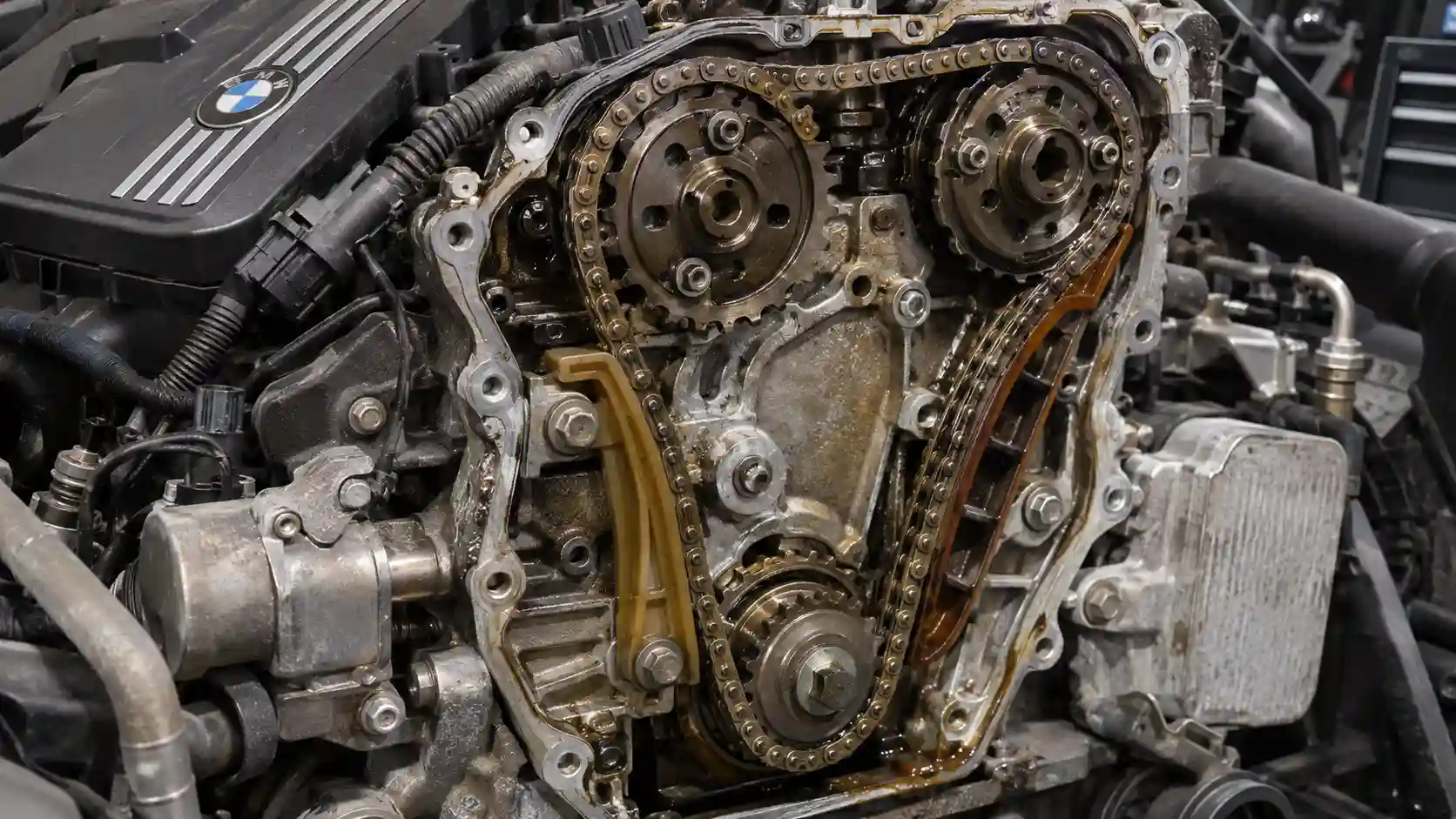
Timing chains run along plastic guides that keep them tight and on track. On early N20 and N26 engines, these guides were made from a plastic that could turn brittle with heat and age.
Once brittle, the guides crack and break into pieces. The loose chain then slaps against the engine, and broken plastic can block the oil pickup or jam the sprockets.
This is why a whining or rattling noise from an N20 should never be ignored. Replacing the guides early with an updated timing kit costs far less than a new engine.
Inspect
A Failing Chain Tensioner
The tensioner keeps the chain tight using engine oil pressure and a spring. When it wears, or when oil pressure drops, the chain can go slack for a moment.
The classic sign is a rattle for a few seconds after a cold start, which then fades as oil pressure builds. This noise is easy to dismiss because the engine sounds normal once warm.
Over time, a weak tensioner lets the chain whip and wear the guides faster. Many repairs replace the tensioner, guides, and chain together as one kit, which avoids paying for labour twice.
Inspect
Poor Oil Maintenance
The timing chain, tensioner, and VANOS system all depend on clean oil at the right pressure. Old or low oil contains wear particles and thins out, which speeds up chain and guide wear.
BMW's long oil service intervals can be too long for UAE heat and stop-start traffic. Many specialists in the region suggest changing oil every 10,000 km or once a year, whichever comes first.
Using the correct BMW-approved oil grade matters as well. A routine oil change service with the right specification is one of the cheapest ways to protect the chain.
Inspect
Chain Stretch From Age and Mileage
Timing chains do not stretch like a rubber band. Instead, the small pins and bushings inside each link wear, so the chain slowly grows longer over many thousands of kilometres.
A stretched chain lets the camshaft timing drift away from the crankshaft. The engine computer notices this and stores camshaft correlation codes such as P0016 or P0017, often with a check engine light.
A technician can measure chain stretch with diagnostic software and a timing check. If the stretch is beyond BMW's limit, the chain and its related parts need replacing.
Inspect
VANOS Camshaft Timing Faults
VANOS is BMW's variable camshaft timing system, which adjusts valve timing for power and economy. It relies on oil pressure and small solenoids that can stick or clog.
A faulty VANOS solenoid can cause rough idle, power loss, and the same P0016 or P0017 codes as a stretched chain. This is why a proper diagnosis checks VANOS before replacing the chain.
Cleaning or replacing a VANOS solenoid is a much smaller job than a timing chain repair. Testing it first can save a large and unnecessary bill.
Which BMW Engines Are Most at Risk?
Four-Cylinder N20 and N26
The N20 and N26 engines, used in many BMWs from 2012 to 2015, carry the highest risk. Their plastic guides and oil pump chain were the focus of the US class action.
BMW improved the parts in later production, so updated timing kits are available. Any used BMW with an N20 should have its timing chain history checked before purchase.
V8 N63 and Six-Cylinder Engines
The twin-turbo N63 V8 has its own history of timing chain wear, often linked to high oil consumption and heat. BMW added a timing chain check to its service actions for these engines.
The N55 six-cylinder is generally more durable, though tensioner wear can appear at high mileage. Newer B48 and B58 engines have a better track record so far, but they still depend on good oil care.
Warning Signs to Watch For
The most common sign is a rattle or chain slap for a few seconds after a cold start. A whining noise from the front of the engine on an N20 can also point to worn guides.
A check engine light with camshaft timing codes, rough idle or a drop in power are other clues. Some cars also show high oil use, which engine trouble signs often link to wider internal wear.
If the chain jumps a tooth or breaks, the engine can stop suddenly and may not restart. On these engines, pistons can hit the valves, which turns a chain repair into an engine rebuild.
How a Timing Chain Problem Is Diagnosed
A proper check starts with a full scan using BMW ISTA+ diagnostic software. This reads stored codes and live camshaft timing values to show how far the timing has drifted.
The technician then listens to the engine on a cold start and checks oil level and condition. On some engines, the valve cover is removed to inspect the guides and tensioner directly.
VANOS solenoids are tested before any chain work is approved. This step separates a simple solenoid fault from a worn chain.
Frequently Asked Questions
How long does a BMW timing chain last?
BMW designs timing chains to last the life of the engine with proper oil care. Engines like the N20 and N26 can show guide or tensioner wear much earlier, sometimes before 100,000 km. Regular oil changes with the correct BMW-approved oil help the chain last longer.
What does a bad BMW timing chain sound like?
Most owners hear a rattle or slapping noise for a few seconds after a cold start. On N20 engines, a whining noise from the front of the engine can also point to worn chain guides.
Can I drive my BMW with a rattling timing chain?
Short, gentle trips may be possible, but every drive adds risk. If the chain jumps a tooth or breaks, the engine can stop suddenly and may not restart. Pistons can also hit the valves and cause major engine damage.
Do P0016 and P0017 always mean a bad timing chain?
No, these camshaft timing codes can also come from a faulty VANOS solenoid or low oil. A proper diagnosis tests these parts before the chain is replaced. Cleaning or replacing a VANOS solenoid is a much smaller job than a timing chain repair.
Which BMW engines have the most timing chain problems?
The four-cylinder N20 and N26 engines built from 2012 to 2015 have the most reported failures. The N63 V8 also has a history of chain wear, often linked to oil consumption. Newer B48 and B58 engines have a better track record so far.
Finish line
Conclusion
A timing chain problem rarely appears without warning. A short rattle on start-up or a camshaft code is the engine asking for attention before damage spreads.
BMW timing chain problems mainly come from worn plastic guides, failing tensioners, poor oil care, chain stretch and VANOS faults. The N20 and N26 engines carry the highest risk, while the N63 also needs close attention. Regular oil changes and early diagnosis keep repair costs far lower.
Zenfo Auto Services in Musaffah M9 diagnoses timing chain faults with BMW ISTA+ and prices work 25 to 40% below dealer rates. Book your BMW in for engine repair and get a written quote before any work begins.
Related services