
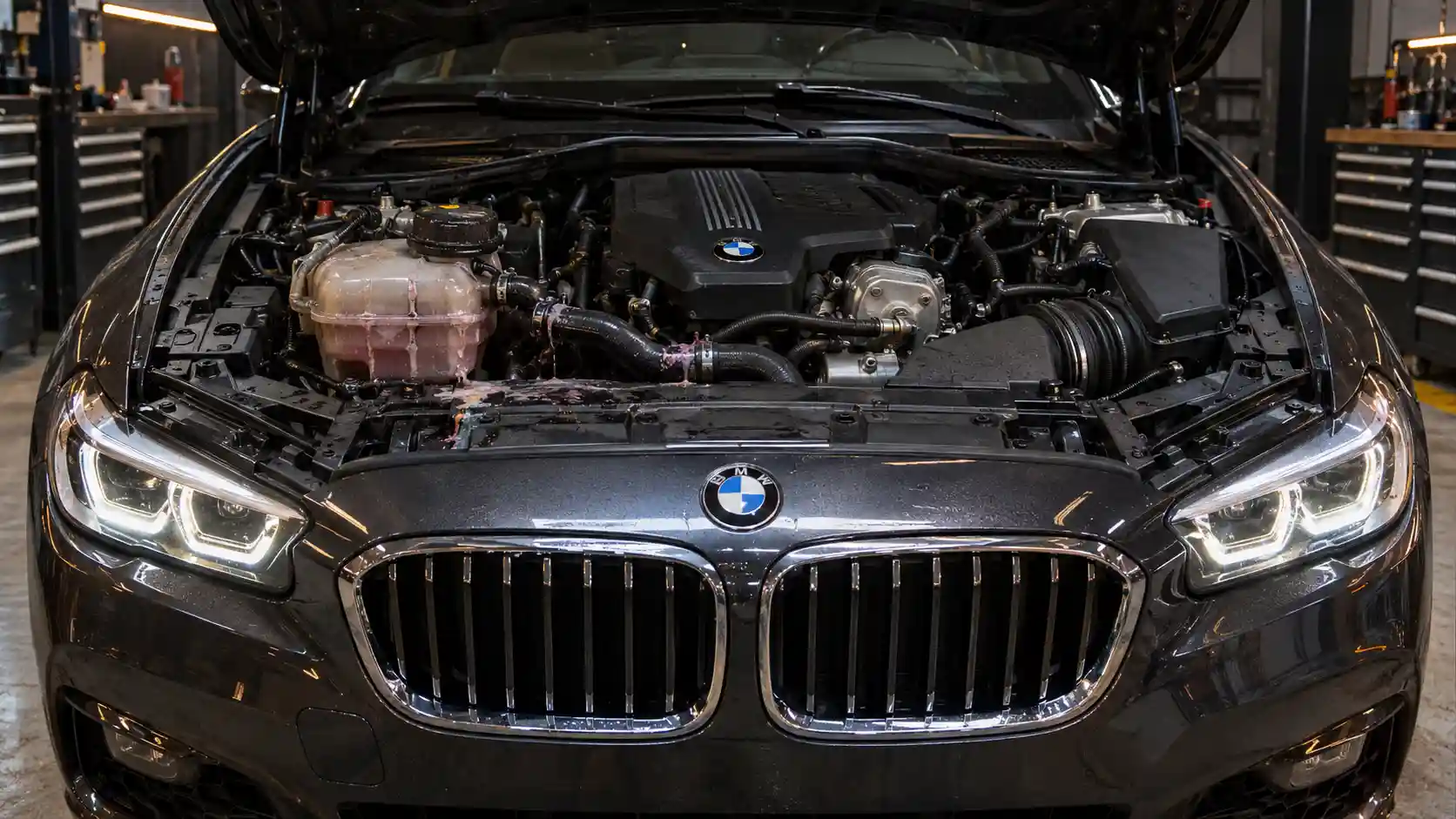
Quick Summary
A BMW usually keeps losing coolant because of a cracked expansion tank, a leaking electric water pump, brittle hoses and connectors, a leaking thermostat housing, a damaged radiator, or head gasket seepage. Heat and age wear out the many plastic cooling parts. A pressure test finds the leak so the right part is replaced. This post helps BMW owners stop coolant loss before it causes overheating.
A low coolant warning on a BMW is easy to treat as a simple top-up. When it keeps coming back, though, the car is losing coolant somewhere, and the cooling system is one of the most important systems on the engine.
Check control · Quick diagnosis
A BMW usually keeps losing coolant because of a cracked expansion tank, a leaking electric water pump, brittle plastic hoses and connectors, a leaking thermostat housing, a damaged radiator, or a head gasket that lets coolant into the engine.
Plastic cooling parts, high heat, and age make several of these more likely on BMWs. The sections below explain each cause, how to spot it, and what the repair usually involves.
BMW Coolant Problems by the Numbers
Cooling parts on BMWs have been the subject of some of the brand's largest recalls. In 2024, BMW recalled 720,796 US vehicles because fluid could reach the electric coolant pump's electrical connector and cause a short circuit.
The recall instructions make an important point for owners. They state that the electric coolant pump itself was not recalled, so ordinary pump failures and leaks are still the owner's cost to repair.
In the workshop, a few figures matter most. An engine running above 110°C is overheating, and a full cooling circuit is pressure-tested to about 1.4 bar to find hidden leaks.
Causes of BMW Keep Losing Coolant
Coolant Loss Causes at a Glance
| Cause | Where to look | Typical warning signs | Usual fix |
|---|---|---|---|
| Cracked expansion tank | Top of the engine bay | Dried coolant crust, damp tank seams | Replace tank and cap |
| Leaking water pump | Front or side of engine | Drips under car, low coolant warning | Replace pump, bleed system |
| Brittle hoses and connectors | Throughout the engine bay | Wet joints, sweet smell after driving | Replace hoses and clips |
| Thermostat housing leak | Near the water pump | Coolant on engine, temperature swings | Replace thermostat and housing |
| Radiator leak | Front of the car | Puddle at the front, damp radiator ends | Replace radiator |
| Head gasket seepage | Inside the engine | No visible leak, white sweet smoke | Pressure and combustion gas tests |
Inspect
A Cracked Expansion Tank
The expansion tank holds extra coolant and lets it expand as the engine heats up. On most BMWs, it is made of plastic that is heated and cooled thousands of times.
Over the years, the plastic turns brittle and can crack along its seams or around the cap. Small cracks may only leak when the system is hot and under pressure, which makes them hard to spot.
Look for a white or coloured crust on the tank and nearby parts. A cracked tank is one of the cheapest coolant leaks to fix, so it is often the first thing checked.
Inspect
A Leaking Electric Water Pump
Many modern BMWs use an electric water pump instead of a belt-driven one. It controls coolant flow precisely, but its seals and electronics can fail with age and heat.
A leaking pump often leaves drips under the front of the car and causes repeated low coolant warnings. When the pump fails, the engine can overheat quickly, sometimes with little warning.
A cracked expansion tank and a worn water pump impeller often turn up together on the same car. Checking both parts in one visit avoids a second trip and a second coolant refill.
Inspect
Brittle Hoses and Plastic Connectors
BMW cooling systems use many plastic connectors and quick-release joints between hoses. Heat makes these parts brittle, and small cracks or worn O-rings start to seep.
These leaks are often slow and only visible as dampness around a joint. A sweet coolant smell after driving, especially with the AC running, is a common clue.
Turbocharged engines, such as the N63 V8, also have coolant lines running to the turbos. These lines sit in extreme heat and can crack or leak over time.
Inspect
A Leaking Thermostat Housing
The thermostat controls when coolant flows to the radiator, keeping the engine at the right temperature. On many BMWs, it sits in a plastic housing with gaskets that can leak.
A failing thermostat can also stick open or closed. If it sticks closed, the engine runs hot, and the extra pressure can push coolant out through weak points elsewhere.
Temperature swings on the gauge, slow warm-up or sudden overheating are typical signs. Replacing the thermostat and its housing together gives the most reliable fix.
Inspect
A Damaged Radiator
The radiator releases engine heat into the air passing through it. Many BMW radiators have plastic end tanks joined to an aluminium core, and that joint can start to leak.
Stones and debris from the road can also damage the thin fins and tubes at the front. A puddle at the front of the car or damp, crusty radiator ends point to this cause.
In hot climates, a radiator works harder for longer each year. Any leak here should be fixed quickly before the engine starts to overheat in traffic.
Inspect
Head Gasket Seepage
When coolant keeps disappearing with no visible leak, it may be leaking inside the engine. A failing head gasket can let coolant pass into the cylinders, where it burns off with the fuel.
White exhaust smoke with a sweet smell is a strong sign of this problem. Other signs include bubbles in the expansion tank, misfires and a milky residue under the oil cap.
This is the most serious cause on the list. After a head gasket repair, the coolant level should be checked every 2,000 km to confirm the fix has held.
Why Hot Climates Make Coolant Loss Worse
High outside temperatures keep the cooling system working near its limit for months each year. Plastic tanks, hoses, and connectors age faster when they sit in that heat every day.
Stop-start traffic adds more strain, because there is less airflow through the radiator. The electric fan and water pump then work harder for longer periods.
Long drives on hot highways also keep coolant at high temperature and pressure. These conditions explain why small leaks often show up in summer and why overheating in traffic is so common on older BMWs.
Is It Safe to Keep Topping Up Coolant?
Topping up can get you home, but it does not fix the cause. Each top-up hides a leak that is likely to grow, and air in the system can create hot spots in the engine.
Running low on coolant can quickly lead to overheating, warped cylinder heads and head gasket failure. These repairs cost far more than replacing a tank, hose or pump.
Always use BMW-approved coolant mixed to the right ratio, and never open the cap when the engine is hot. If you need to top up more than once in a few weeks, book an inspection.
How Coolant Leaks Are Diagnosed
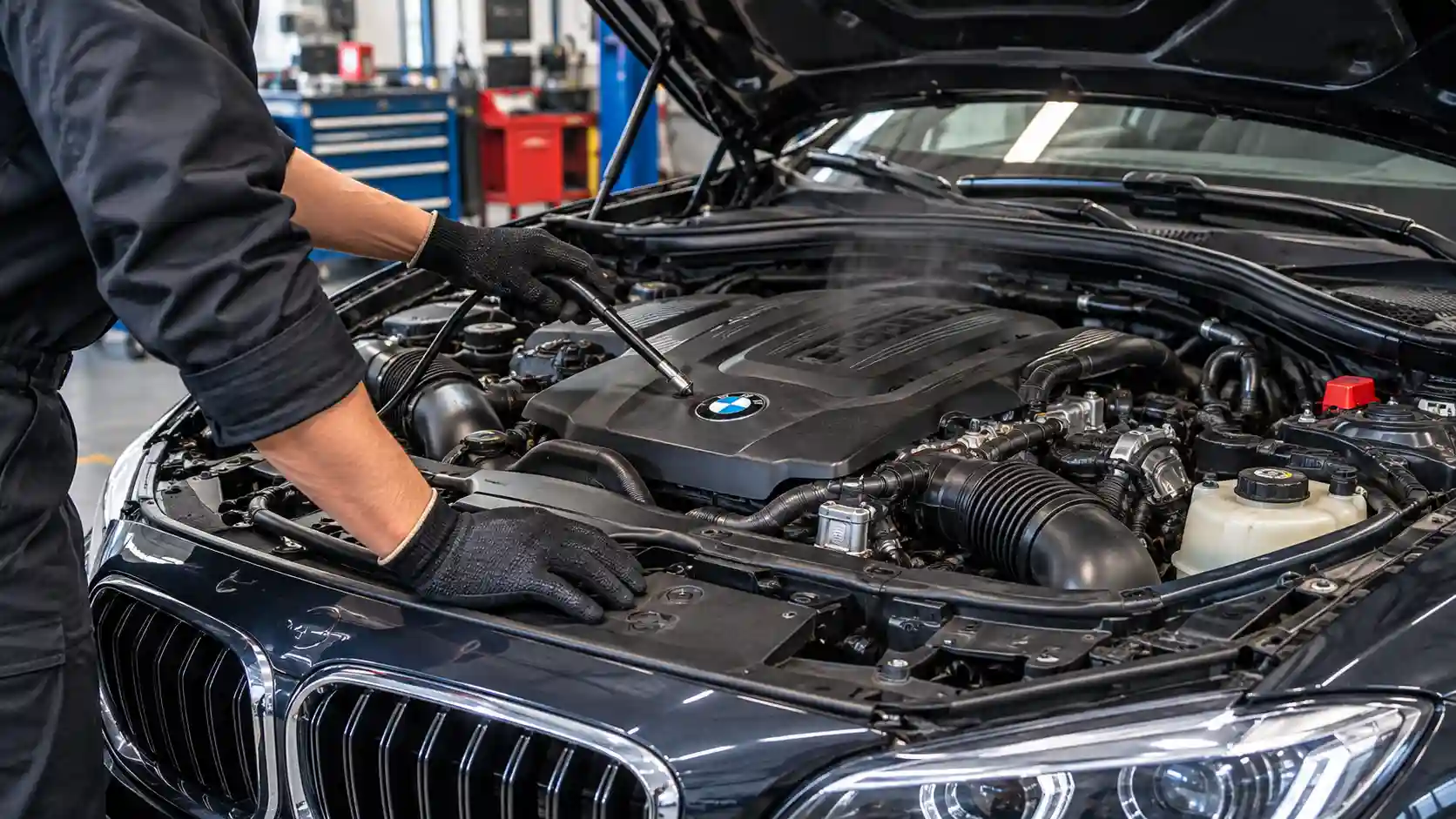
A proper check begins with a visual inspection of the tank, pump, hoses, thermostat housing, and radiator. Dried coolant crust often shows exactly where a slow leak starts.
The technician then pressure-tests the cooling system to about 1.4 bar. This forces small leaks to show themselves, even ones that only appear when the engine is hot.
If no outside leak is found, a combustion gas test checks for head gasket failure. A full scan with BMW diagnostic software also checks the water pump and thermostat for stored faults.
Frequently Asked Questions
Why is my BMW losing coolant but not overheating?
A slow leak from the expansion tank, a hose joint or the water pump may not drop the level enough to overheat the engine yet. It will usually get worse, so the leak should be found before the level falls too low.
Where does BMW coolant usually leak from?
The most common sources are the expansion tank, the electric water pump, plastic hose connectors, and the thermostat housing. Radiator end tanks and turbo coolant lines on some engines are also frequent leak points.
Can I drive my BMW with a low coolant warning?
Short, careful trips may be possible after topping up with the right coolant. If the warning returns quickly or the temperature rises, stop driving and have the system checked. Running low on coolant can quickly lead to overheating and head gasket failure.
What does white smoke with a sweet smell mean?
It usually means coolant is burning inside the engine, often from a failing head gasket. Other signs include bubbles in the expansion tank, misfires, and a milky residue under the oil cap. This needs prompt attention to avoid serious engine damage.
Was the BMW water pump recalled?
No, BMW's 2024 recall covered the electric coolant pump's electrical connector, not the pump itself. A leaking or failed pump outside that recall is a normal repair and is not covered for free. The recall affected 720,796 US vehicles.
Finish line
Conclusion
A BMW that keeps losing coolant is giving an early warning. Finding the leak now is far cheaper than repairing an engine damaged by overheating.
The most common reasons a BMW keeps losing coolant are a cracked expansion tank, a leaking water pump, brittle hoses and connectors, a leaking thermostat housing, a damaged radiator and head gasket seepage. Heat and age speed up wear on the many plastic parts in BMW cooling systems. A pressure test quickly pinpoints the source, so the right part is replaced the first time.
Zenfo Auto Services in Musaffah M9 pressure-tests BMW cooling systems and prices repairs 25 to 40% below dealer rates. Bring your BMW in for engine repair and stop the coolant loss before it leads to overheating.
Related services