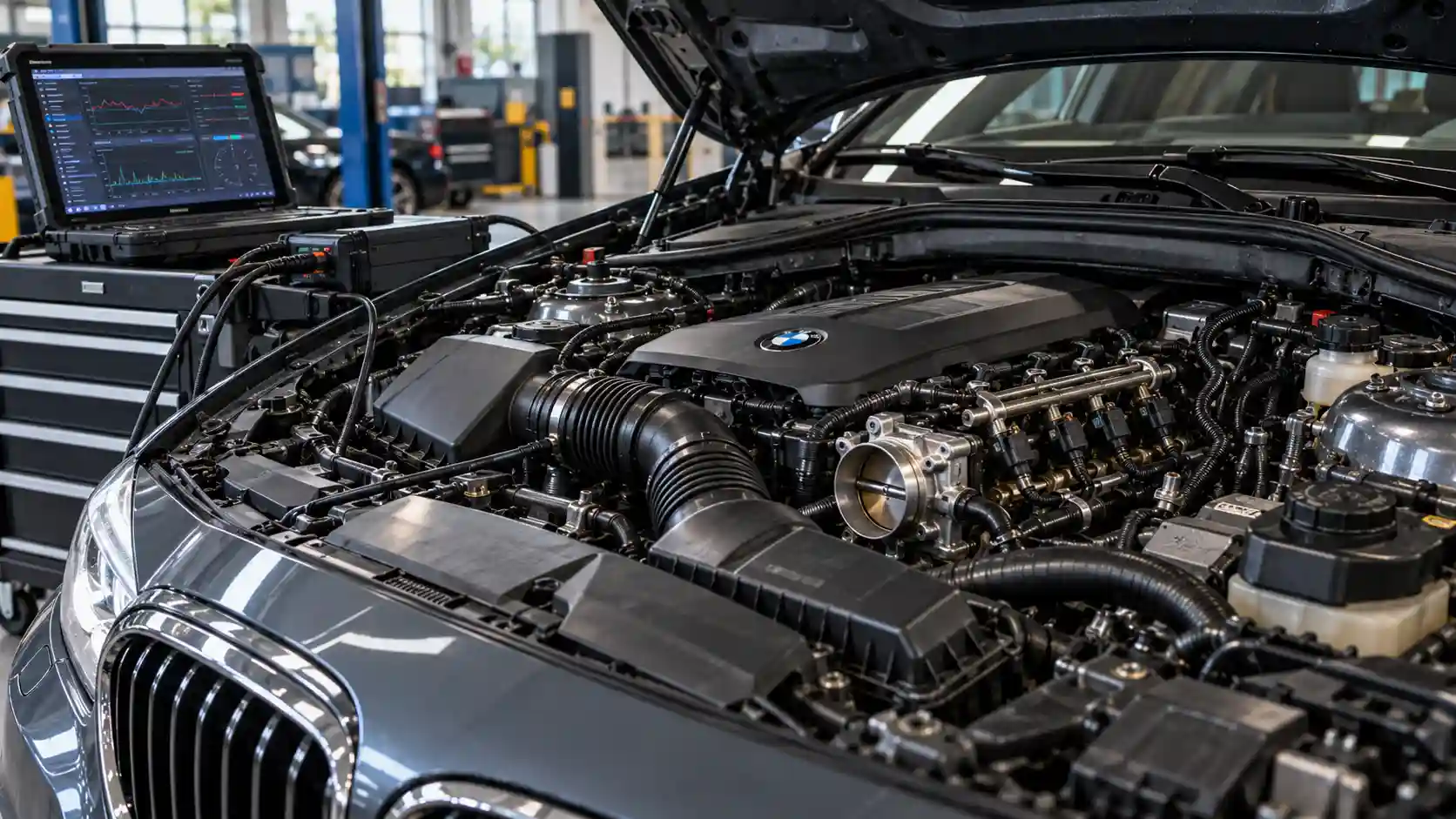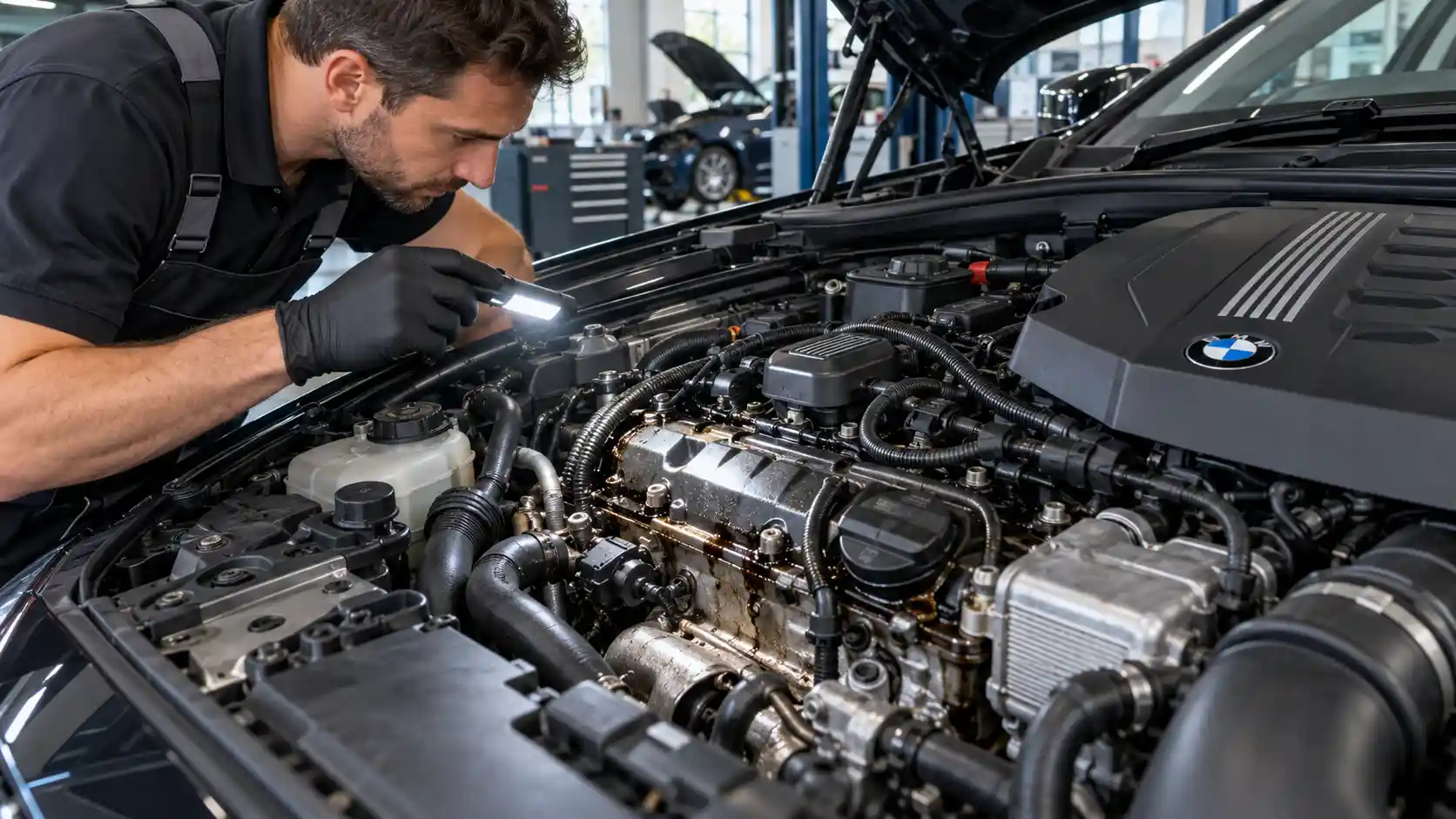


BMW engines are built for strong performance, smooth power, and a comfortable drive. However, like any engine, they can develop oil leaks as parts wear out over time. High temperatures, worn seals, poor maintenance, and damaged gaskets can allow engine oil to escape. Even a small leak can become a costly problem if you ignore it.
Check control · Quick diagnosis
The most common causes of oil leaks in BMW engines include a worn valve cover gasket, a leaking oil filter housing gasket, and a damaged oil pan gasket.
Crankshaft seals, a faulty oil filter cap seal, and loose drain plugs can cause leaks as well. In some cases, high crankcase pressure can push oil past seals that would otherwise work correctly. Finding the source early helps protect the engine and avoid expensive repairs.
Most Common Causes of Oil Leaks in BMW Engines
Inspect
Worn Valve Cover Gasket
The valve cover sits on top of the engine and protects the parts inside the cylinder head. A gasket between the valve cover and cylinder head creates a tight seal to keep engine oil inside. Over time, heat and normal engine use can make this gasket hard, weak, or cracked. When the seal fails, oil may leak onto nearby engine parts.
This is a common area to inspect when a BMW develops an oil leak, especially as the car gets older or covers more kilometres. The exact design and repair method depend on the engine model.
Inspect
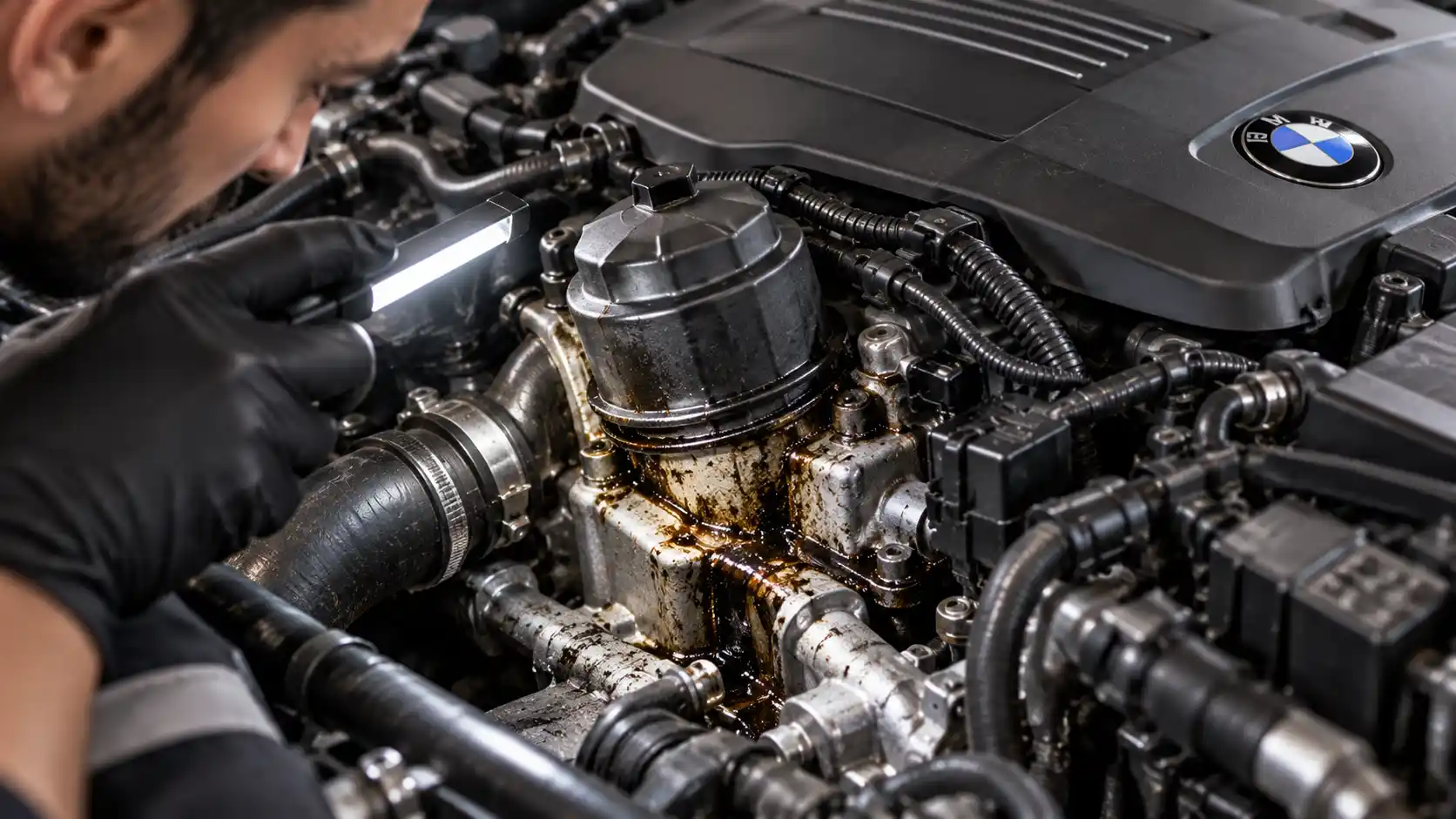
Leaking Oil Filter Housing Gasket
The oil filter housing holds the engine oil filter and connects it to the engine's oil system. A gasket seals the housing against the engine, preventing oil from escaping. As the gasket ages, repeated heating and cooling can cause it to harden and lose its ability to seal properly.
On some BMW engines, oil filter housing gasket leaks are a known repair concern. Oil may spread across nearby engine parts, making the source difficult to identify without cleaning and careful inspection. A leak here should be repaired promptly rather than left until the oil level drops.
Inspect
Damaged Oil Pan Gasket
The oil pan sits at the bottom of the engine and holds the engine oil when it is not circulating through the system. A gasket or seal helps keep oil inside the pan. Over time, the gasket may wear out, or the oil pan itself may become damaged.
Because the oil pan is close to the road, it can be exposed to impacts from road debris, uneven surfaces, and speed bumps. A leak may start slowly and become more noticeable as the seal continues to weaken.
Inspect
Worn Crankshaft Seals
The crankshaft turns as the engine runs, helping convert the movement of the pistons into rotational power. Seals around the crankshaft help prevent engine oil from escaping where the shaft passes through the engine housing. Depending on the location, these are known as the front crankshaft seal and rear crankshaft seal.
Over time, seals may become hard, worn, or damaged. High engine temperatures, age, and excess crankcase pressure can contribute to failure. Because the crankshaft keeps moving while the engine is running, a damaged seal can allow oil to escape during normal operation.
Inspect
High Crankcase Pressure
Crankcase pressure is the pressure that builds inside the engine area around the crankshaft. A BMW engine uses a crankcase ventilation system to control this pressure and direct gases back into the intake system. Depending on the engine, this system may be called the positive crankcase ventilation system, or PCV system.
If the ventilation system becomes blocked or fails, pressure can rise inside the engine. This pressure may push oil past gaskets and seals, causing leaks that appear in more than one location.
Inspect
Loose Oil Drain Plug or Damaged Seal
The oil drain plug is fitted at the bottom of the oil pan. It is removed during an oil change so the old engine oil can drain out. A sealing washer or other approved seal helps prevent oil from escaping once the plug is fitted again.
If the plug is loose, the seal is damaged, or the threads are worn, oil may leak from this area. Incorrect tightening during an oil change can cause problems, while overtightening may damage the oil pan threads.
Inspect
Oil Leaks from the Turbocharger System
Many BMW models use turbocharged engines. A turbocharger uses exhaust gas to spin a turbine, helping force more air into the engine for better power. It also relies on engine oil to lubricate and cool its moving parts. Oil pipes and connections carry oil to and from the turbocharger.
If a turbo oil line, seal, or connection becomes damaged, oil may leak near the turbocharger. However, oil found around the intake or exhaust system does not always mean the turbo itself has failed. A blocked oil return line or crankcase pressure issue may create similar symptoms.
Inspect
Oil Leaks from the Timing Cover
The timing system helps the engine's valves open and close at the correct time. Depending on the BMW engine, the timing chain and related parts may be located behind a cover that helps keep oil inside the engine. A gasket or sealing material prevents oil from escaping around this cover.
Over time, the seal may weaken, or the cover may become damaged. Oil can then leak from the front or side of the engine. This type of leak may be difficult to spot because nearby parts can hide the source.
Inspect
Using the Wrong Engine Oil or Missing Oil Changes
Engine oil protects moving parts, reduces friction, and helps carry heat away from engine components. BMW engines require oil that meets the specifications for the particular engine. Using the wrong oil may affect lubrication and performance, while missed oil changes can allow dirt and deposits to build up.
Incorrect oil does not automatically cause a gasket to leak, but poor maintenance can add to engine wear and may make an existing problem worse. Oil that is too thin for the required specification or an unsuitable product can affect how well the engine is protected.
How Does UAE Weather Affect BMW Oil Leaks?
The UAE's hot weather can place extra stress on engine seals, gaskets, and plastic parts. During normal driving, the engine heats up and cools down repeatedly.
Over time, these temperature changes can cause some sealing materials to harden or lose flexibility. Heavy traffic can add to the engine's heat load, especially when the cooling system is not working properly.
However, hot weather alone does not prove that a BMW's oil leak has been caused by the climate. The engine design, age, mileage, maintenance history, and condition of its parts all matter.
What Are the Warning Signs of a BMW Oil Leak?
BMW oil leaks do not always begin with a large puddle. In many cases, the first sign is a small wet patch around a gasket or a faint burning smell. Learning to recognise these early clues can help you arrange repairs before the oil level becomes dangerously low.
Common signs include:
- Dark brown or black oil under the car.
- A burning oil smell after driving.
- Smoke coming from the engine area.
- Oil marks around the valve cover or oil filter housing.
- An engine oil level warning.
- Needing to top up engine oil more often than usual.
- Fresh oil around the bottom of the engine.
- Oil collecting near belts, pulleys, or the gearbox joint.
Engine oil can spread across several parts before it drips onto the ground. The place where you see the oil may not be where the leak started. A proper inspection is the best way to identify the source.
Is It Safe to Drive a BMW with an Oil Leak?
Whether you can drive with an oil leak depends on how serious it is. A small seep may not cause an immediate problem, but it should still be checked. A fast leak, low oil pressure warning, or rapidly falling oil level can put the engine at serious risk.
Safety firstIf the red oil pressure warning appears while driving, stop as soon as it is safe and switch off the engine. Do not keep driving to reach a workshop. Low oil pressure can damage bearings and other internal engine parts in a short time.
If you notice smoke, a strong burning smell, or oil leaking onto hot components, stop in a safe place and seek professional advice. When the leak is severe or the oil level is too low, arranging recovery is safer than driving the car.
How Much Does It Cost to Fix a BMW Oil Leak?
The cost of repairing a BMW oil leak depends on the source, engine type, parts needed, and labour time. Replacing an oil drain plug seal is usually a smaller job than replacing a rear crankshaft seal or reaching a timing cover. Some repairs require the removal of several engine parts, which increases labour costs.
The age of the car and availability of suitable parts can affect the final price as well. A technician should inspect the leak and provide a clear estimate before work begins.
| Oil leak source | Typical repair work | Relative repair effort |
|---|---|---|
| Oil drain plug seal | Replace seal and check threads | Low |
| Valve cover gasket | Replace gasket or damaged cover | Low to medium |
| Oil filter housing gasket | Replace gasket and clean affected area | Medium |
| Oil pan gasket | Replace gasket or repair damaged pan | Medium to high |
| Front crankshaft seal | Remove nearby parts and replace seal | Medium to high |
| Rear crankshaft seal | Remove transmission if required | High |
| Turbo oil line | Replace leaking pipe or seal | Depends on access |
| Timing cover seal | Remove surrounding parts and reseal | Medium to high |
These are general comparisons, not fixed prices. The exact repair effort depends on the BMW model and engine layout. Ask for a diagnosis first, so you do not pay to replace parts that are still working properly.
How Can You Prevent BMW Engine Oil Leaks?
You cannot prevent every oil leak, but regular maintenance can help reduce the risk and catch problems early. Gaskets and seals wear out over time, so inspecting them during routine servicing is useful, especially as your BMW gets older.
Follow these practical steps:
- Change engine oil and filters at the recommended intervals.
- Use oil that meets the correct BMW specification.
- Check the oil level according to the owner's manual.
- Ask for gaskets, seals, and oil lines to be inspected during servicing.
- Repair small leaks before they spread to other parts.
- Ensure the crankcase ventilation system works correctly.
- Have oil spills cleaned so new leaks are easier to spot.
- Check the engine after oil changes for leaks around the filter and drain plug.
- Avoid ignoring oil level or oil pressure warnings.
If your BMW needs frequent oil top-ups, do not assume that this is normal for every engine. The cause may be an external leak, oil burning inside the engine, or a combination of both. A proper inspection can help determine the right solution.
Finish line
Conclusion
Oil leaks in BMW engines are commonly caused by worn valve cover gaskets, leaking oil filter housing gaskets, damaged oil pan seals, and worn crankshaft seals. Faulty crankcase ventilation, loose drain plugs, turbo oil line problems, and timing cover leaks can cause oil to escape as well. Heat, age, and poor maintenance may add to the problem, but the exact cause depends on the engine and its condition.
Watch for oil spots, burning smells, smoke, and falling oil levels. Do not ignore an oil pressure warning, as low oil pressure can cause severe engine damage. Regular servicing and early diagnosis can help keep repair costs under control.
If you notice oil leaking from your BMW, contact BMW Garage Abu Dhabi for a professional inspection. A skilled technician can locate the leak, check related engine parts, and recommend the right repair to help keep your BMW running smoothly on UAE roads.
Related services