
Quick Summary
The main signs of BMW engine trouble are a check engine light, knocking or ticking sounds, oil leaks, overheating, and exhaust smoke. Poor acceleration, rough idling, higher fuel use, and hard starting are also warning signs. A flashing check engine light or a red oil pressure warning needs fast action. This post helps BMW owners spot problems early and know when to stop driving.
BMW cars are known for their strong engines, smooth performance, and driving comfort. However, like any car, a BMW can develop engine problems due to worn parts, poor maintenance, oil leaks, or cooling system faults. Ignoring early warning signs can turn a small repair into an expensive engine problem.
Check control · Quick diagnosis
Some common signs of BMW engine trouble include unusual knocking sounds, engine warning lights, oil leaks, overheating, and poor acceleration. You may also notice rough idling, excessive exhaust smoke, or increased fuel use.
These symptoms can point to problems with the ignition system, fuel delivery, engine sensors, or internal engine parts. Finding the cause early can help prevent further damage and keep your BMW running smoothly.
Most Common Signs of BMW Engine Trouble
Inspect
Engine Warning Light Turns On
The check engine light is one of the first signs that something may be wrong with your BMW's engine. It can turn on when the engine control unit (ECU) detects a problem with a sensor, ignition system, fuel mixture, or emissions control parts. Sometimes, the car may still drive normally even when this light appears.
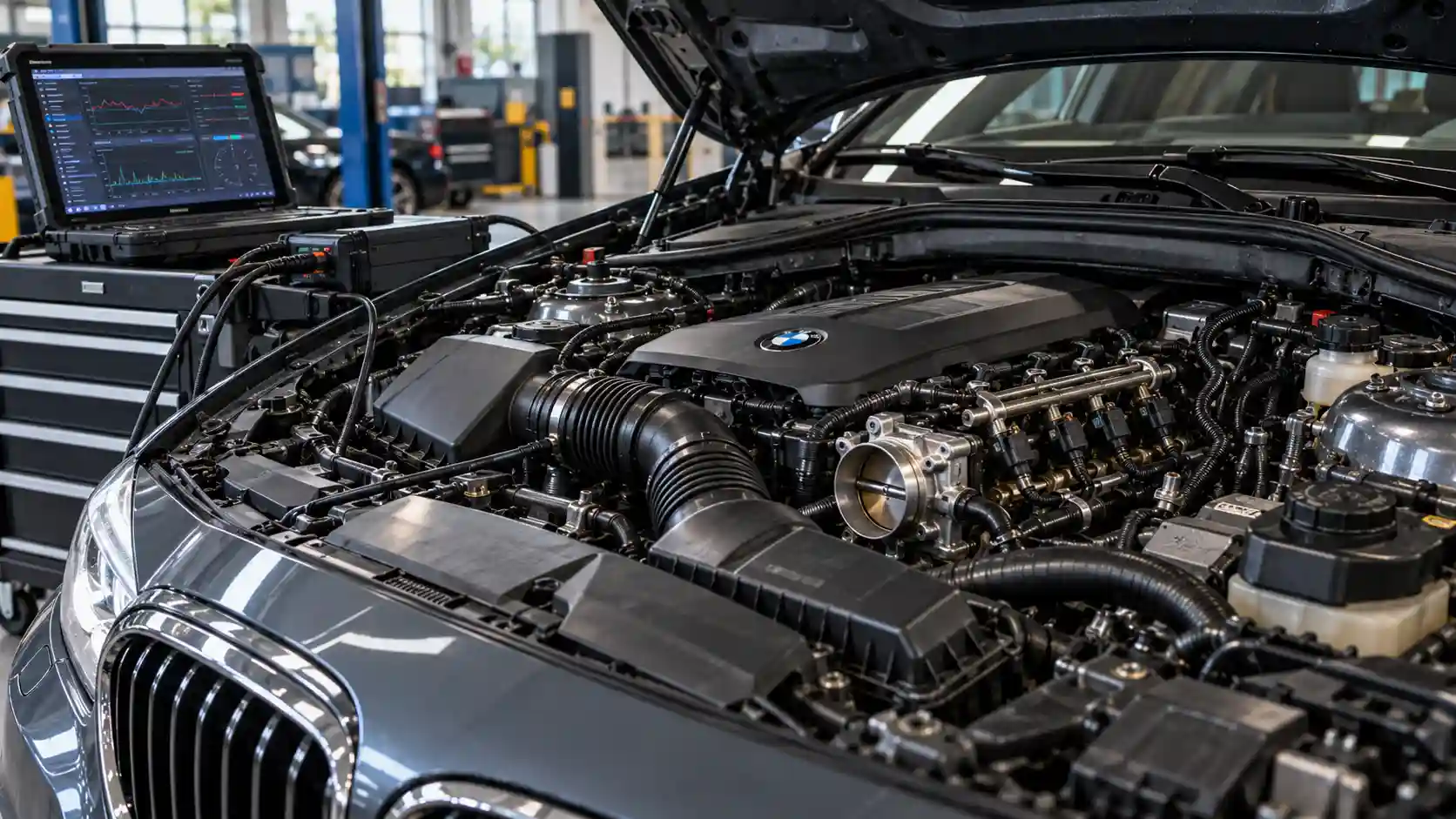
A steady check engine light usually means you should arrange a diagnostic check soon. However, a flashing light can indicate a serious issue, such as an engine misfire, that needs immediate attention. A BMW diagnostic scanner can read fault codes and help the mechanic find the source of the problem.
Inspect
Unusual Knocking or Ticking Sounds
BMW engines are designed to run smoothly, so new or unusual sounds should not be ignored. You may hear knocking, tapping, rattling, or ticking from the engine area. These sounds can point to problems with the lubrication system, timing components, valve train, or other moving parts.
For example, a knocking sound may occur when engine parts are not receiving enough lubrication or when internal components become worn. A ticking noise can sometimes come from the valve train or fuel injectors, depending on the engine type. If the noise becomes louder with acceleration or continues after the engine warms up, have it inspected by a mechanic.
Inspect
Excessive Engine Oil Consumption
If you need to add engine oil more often than usual, your BMW may have an oil leak or an internal engine problem. Some BMW engines can develop oil consumption issues as parts such as valve stem seals, piston rings, or crankcase ventilation components wear out.
You may notice a low oil level warning, blue smoke from the exhaust, or a burning oil smell. Check the oil level according to your vehicle's manual and look for signs of leakage. Do not ignore repeated low oil warnings, as insufficient lubrication can increase friction and damage important engine parts.
Inspect
Engine Overheating
Engine overheating is a serious problem that can cause major damage if you continue driving. BMW engines use a cooling system with parts such as the radiator, water pump, thermostat, coolant hoses, and expansion tank to control engine temperature. A fault in any of these parts can affect cooling performance.
Common warning signs include:
- Engine temperature rising above its normal range.
- A coolant warning appearing on the dashboard.
- Steam coming from under the bonnet.
- Coolant leaking under the car.
- Unusual temperature changes while driving.
Safety firstIf your BMW shows a red overheating warning, stop somewhere safe, switch off the engine, and allow it to cool. Never open the coolant cap while the engine is hot because pressurised coolant can cause serious burns.
Inspect
Blue, White, or Black Smoke from the Exhaust
The colour of exhaust smoke can provide useful information about possible engine problems. A small amount of vapour during a cold start may be normal, but thick or continuous smoke needs attention. Different smoke colours can point to different faults in the engine or fuel system.
- Blue smoke: Often indicates that engine oil is burning inside the cylinders. Possible causes include worn piston rings, valve stem seals, or turbocharger seal problems.
- White smoke: Thick, persistent white smoke with a sweet smell may indicate coolant entering the combustion chamber.
- Black smoke: Can point to excess fuel, poor air supply, injector problems, or a fault in the engine management system.
Do not judge the problem by smoke colour alone. A proper inspection can help identify the actual cause.
Inspect
Rough Idling and Engine Vibrations
A healthy BMW engine should run smoothly when the car is stationary. If you notice shaking, uneven engine speed, or unusual vibrations while waiting at a traffic signal, there may be a problem with the ignition or fuel system.
One common cause is an engine misfire. This happens when one or more cylinders fail to burn the air-fuel mixture properly.
Worn spark plugs, faulty ignition coils, dirty fuel injectors, and air leaks can cause this issue. You may notice the RPM needle moving up and down or the engine struggling to stay stable. A diagnostic scan and engine inspection can help find the faulty part.
Inspect
Loss of Engine Power and Slow Acceleration
If your BMW takes longer to accelerate or struggles when climbing a hill, it may have an engine performance problem. You might notice that pressing the accelerator does not produce the expected response.
In some cases, the car may enter limp mode, which limits engine power to help protect important components. Possible causes include a blocked air filter, fuel delivery problems, turbocharger faults, boost leaks, or faulty engine sensors.
A problem with the ignition system can cause similar symptoms. Avoid repeatedly pressing the accelerator to force the car to gain speed. Get the engine checked to identify the reason for the reduced performance.
Inspect
Oil or Coolant Leaking Under the Car
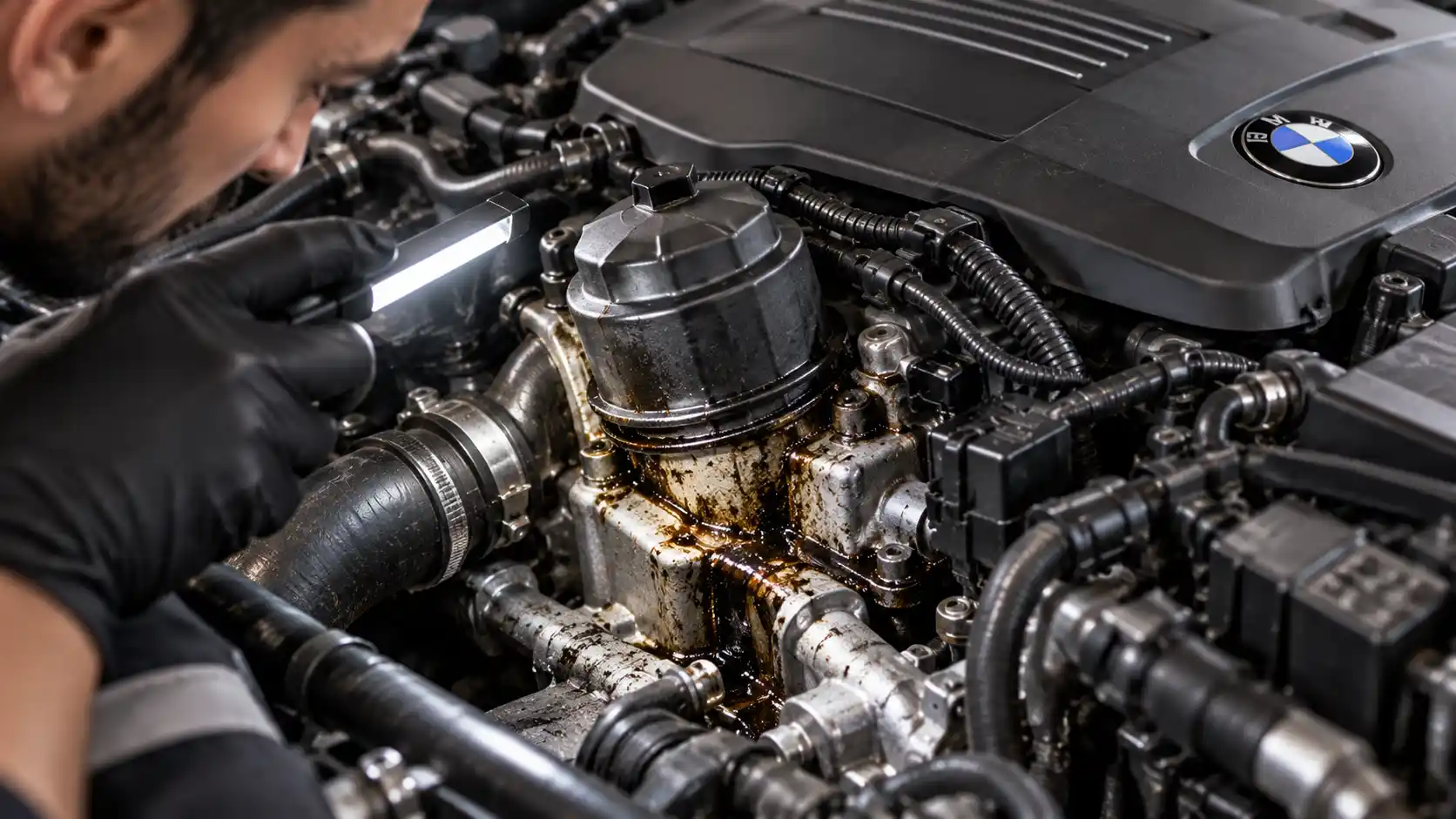
Fluid leaks are another common warning sign that your BMW needs attention. Oil leaks may develop when gaskets, seals, or other engine components become worn. Common areas that need inspection include the valve cover gasket and oil filter housing gasket on applicable BMW engines.
Coolant leaks can occur around the expansion tank, radiator, water pump, hoses, or thermostat housing. You may notice dark brown or black oil marks under the engine, or coloured coolant spots beneath the car. A burning oil smell can occur when leaking oil reaches hot engine parts. Do not simply top up the fluids and ignore repeated leaks. Find and repair the source before it causes further damage.
Inspect
Poor Fuel Economy
A sudden increase in fuel consumption can be another sign of engine trouble. If your BMW starts using more fuel for the same daily journeys, something may be affecting the way the engine burns fuel.
Faulty oxygen sensors, dirty fuel injectors, worn spark plugs, air leaks, and incorrect air-fuel mixtures can reduce fuel efficiency. A blocked air filter may also affect engine performance.
However, traffic, tyre pressure, driving habits, and air conditioning use can influence fuel consumption too. Compare your recent fuel use with your normal driving pattern. If the increase continues, have the engine management system checked to identify any faults.
Inspect
Difficult Starting or Frequent Engine Stalling
A BMW engine that takes several attempts to start may have a problem with fuel delivery, ignition, or engine sensors. You may notice longer cranking times, weak starting, or the engine switching off shortly after starting.
Common causes include weak fuel pressure, faulty injectors, worn spark plugs, ignition coil problems, or a failing crankshaft position sensor. A faulty sensor can affect the timing of fuel injection and ignition.
If the engine stalls while driving, it can create a safety risk, especially in heavy traffic. Avoid continuing to drive a car that repeatedly stalls. Get professional diagnostics to identify the fault before it becomes worse.
Inspect
Cold Start Rattling and Timing Chain Problems
A rattling sound when starting your BMW, especially after it has been parked overnight, may indicate a problem with the timing chain or its related parts. The timing chain keeps the crankshaft and camshaft working together so the engine valves open and close at the correct time.
A worn timing chain, damaged guides, or a weak tensioner can create a metallic rattling noise. Some BMW engine families, including certain N20 petrol and N47 diesel engines, have known timing chain concerns.
However, not every rattling sound means the chain is faulty. A mechanic should inspect the timing system and check for related fault codes before recommending repairs.
When Should You Stop Driving Your BMW?
Not every engine warning means you need to stop immediately. However, some symptoms can indicate a serious fault that may cause major engine damage if you continue driving.
Stop the car safely and switch off the engine if you notice:
- A red engine oil pressure warning.
- A red engine overheating warning.
- Loud knocking or heavy metallic sounds.
- Heavy smoke coming from the exhaust or engine area.
- A major oil or coolant leak.
- Severe engine shaking or repeated stalling.
Do not restart the engine if you suspect a serious oil pressure or overheating problem. Arrange roadside assistance or towing to a workshop. Driving further can turn a repairable fault into expensive engine damage.
How Can You Prevent BMW Engine Problems?
Regular maintenance is one of the best ways to keep your BMW engine in good condition. Engine oil, coolant, filters, spark plugs, and other parts need attention according to the vehicle manufacturer's service schedule. Skipping maintenance can increase wear and allow small problems to develop into larger faults.
Follow these simple maintenance tips:
- Change engine oil and the oil filter at the recommended intervals.
- Check engine oil and coolant levels regularly.
- Inspect hoses, gaskets, and seals for leaks.
- Replace worn spark plugs and air filters when needed.
- Pay attention to new engine noises and dashboard warnings.
- Get the cooling system checked during regular servicing.
- Use the correct engine oil and approved replacement parts.
Also, avoid driving aggressively when the engine is cold. Allow it to reach normal operating temperature before putting it under heavy load. These habits can help reduce unnecessary engine wear.
Frequently Asked Questions
Is it safe to drive a BMW with the check engine light on?
It depends on how the light behaves. A steady check engine light usually means you should book a diagnostic check soon, and the car may still drive normally. A flashing check engine light can mean a serious problem, such as an engine misfire, and it needs attention right away.
What does blue smoke from a BMW exhaust mean?
Blue smoke often means engine oil is burning inside the cylinders. Worn piston rings, worn valve stem seals, or turbocharger seal problems can cause it. The oil level may also drop faster than usual. Smoke colour alone cannot confirm the fault, so the engine needs a proper inspection.
Why is my BMW using so much engine oil?
A BMW that needs frequent oil top-ups may have an oil leak or worn internal engine parts. Valve stem seals, piston rings, and crankcase ventilation parts can wear out over time. Low oil increases friction, which can damage important engine parts, so repeated low oil warnings should never be ignored.
What causes a rattling noise when a BMW starts in the morning?
A rattle on a cold start, especially after the car sits overnight, can point to a worn timing chain, damaged chain guides, or a weak tensioner. Some N20 petrol and N47 diesel engines have known timing chain concerns. Not every rattle means the chain is faulty, so a mechanic should check first.
How do mechanics find the cause of BMW engine problems?
Mechanics start with a BMW diagnostic scanner, which reads the fault codes stored by the engine control unit (ECU). The codes point to the system involved, such as a sensor, the ignition, or the fuel mixture. The mechanic then inspects the engine and related parts to confirm the real cause.
Finish line
Conclusion
BMW engine trouble often starts with small warning signs. An illuminated check engine light, unusual noises, oil leaks, overheating, blue exhaust smoke, and poor acceleration can all point to problems that need attention. Other symptoms to watch for include rough idling, increased fuel consumption, and difficult starting.
The best approach is to identify the cause early rather than waiting for the engine to fail. Regular oil changes, cooling system checks, and timely repairs can help prevent serious damage.
If your BMW is showing any of these warning signs, Zenfo Auto Services can help with professional car inspection, engine diagnostics, and BMW repair services. Get your BMW checked by experienced mechanics and address engine problems before they become more expensive to fix.
Related services