
BMW cars are known for their strong engines, smooth drive, and advanced features. However, the hot weather, dusty roads, and heavy traffic in the UAE can put extra stress on their parts. Regular care is important to keep a BMW running well and avoid costly repairs.
Check control · Quick diagnosis
The most common BMW problems in the UAE include engine overheating, oil leaks, and cooling system faults. Some owners also face gearbox issues, battery problems, and electrical faults. Air conditioning failures and worn suspension parts are other concerns, especially when a car is driven daily in hot weather. Knowing the early warning signs can help you fix small faults before they cause serious damage.
Top Most Common BMW Issues You Can Face in UAE
Inspect
Engine Overheating in Hot Weather
Engine overheating is one of the main concerns for BMW owners in the UAE. High outdoor temperatures make it harder for the cooling system to remove heat from the engine. Long traffic jams, low coolant levels, and worn cooling parts can make the problem worse.
If the engine temperature rises above its normal range, you should take it seriously. Continuing to drive with an overheating engine can damage the cylinder head, head gasket, or other costly parts.
Common Signs of Engine Overheating
Watch for these warning signs while driving:
- A high engine temperature warning on the dashboard.
- Steam coming from under the bonnet.
- Coolant leaking beneath the car.
- A sweet smell near the engine.
- Reduced engine power or an overheating warning.
Safety firstIf you notice these signs, stop in a safe place and switch off the engine. Never open the coolant tank while the engine is hot because pressurised coolant can cause serious burns.
How to Prevent Engine Overheating
Have the coolant level, radiator, water pump, thermostat, and cooling fan checked during regular servicing. BMW cooling systems may use electric water pumps and electronically controlled thermostats, depending on the model.
These parts can fail and affect temperature control. Use the coolant type approved for your specific BMW and avoid mixing different coolant products without checking their compatibility.
Inspect
Engine Oil Leaks
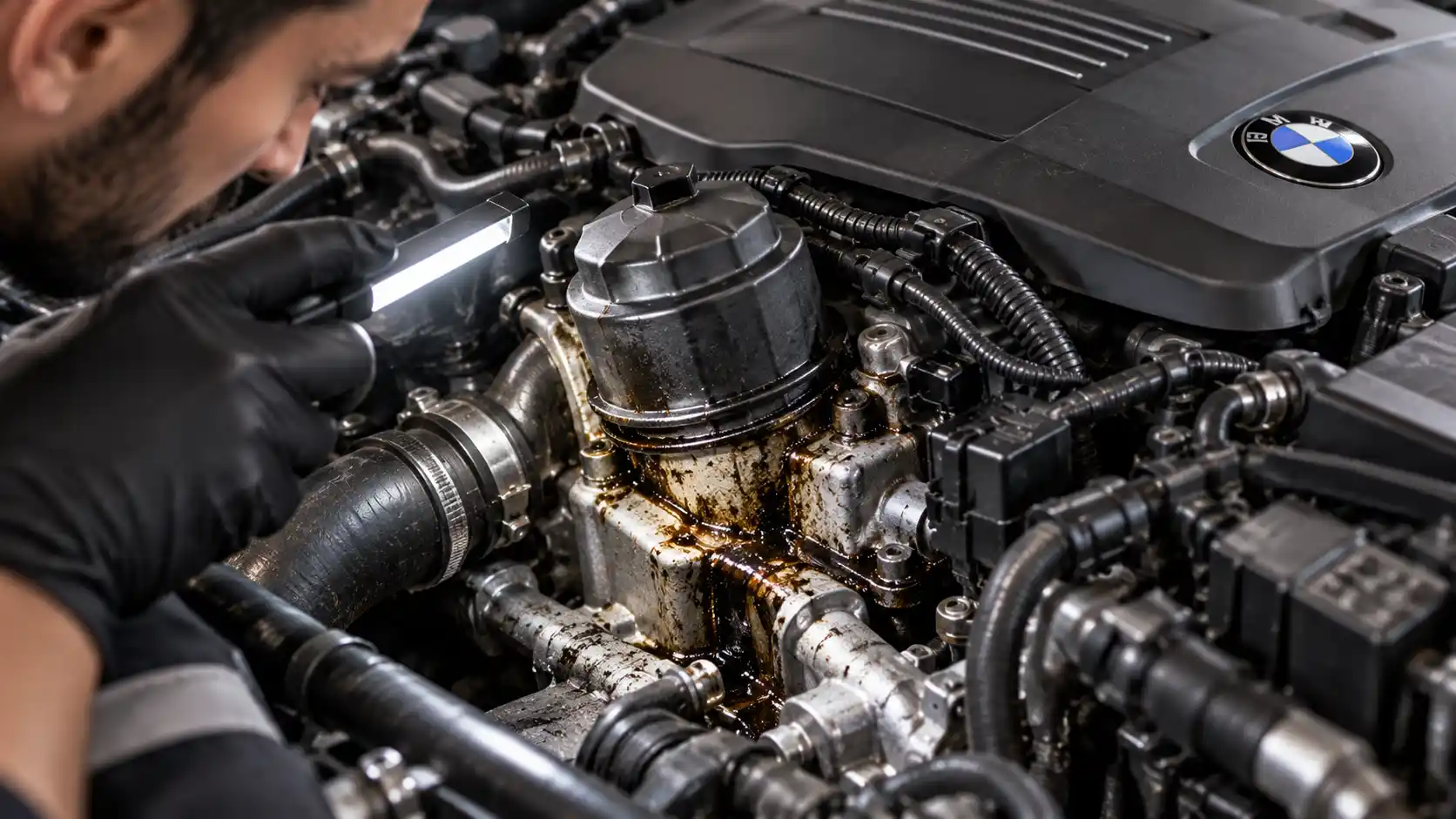
Oil leaks are another common issue in older BMW models and cars with high mileage. Engine seals and gaskets can become hard or worn over time, allowing oil to escape. High temperatures can speed up the ageing of rubber parts. If the leak is ignored, the engine may lose too much oil, which can increase friction and cause serious internal damage.
Common Areas Where BMW Engines Leak Oil
The exact leak location depends on the engine design, model, and age. However, a technician may check the following parts:
- Valve cover gasket: This seals the top of the engine and may leak as it ages.
- Oil filter housing gasket: A leak here can spread oil around the engine.
- Oil pan gasket: This may allow oil to collect underneath the car.
- Front and rear crankshaft seals: Worn seals can allow oil to escape around the crankshaft.
Oil spots on the parking area, a burning oil smell, or smoke from the engine area may point to a leak.
How to Avoid Serious Oil Leak Damage
Check your engine oil level according to the instructions for your model. Do not ignore oil level warnings or add oil without checking the correct grade and amount. A BMW garage can inspect the engine, find the source of the leak, and replace the faulty gasket or seal. Cleaning the affected area before a follow-up check can help confirm that the repair has worked.
Inspect
Cooling System and Coolant Leaks
A BMW cooling system does more than prevent overheating. It keeps the engine within its correct operating temperature, helping the engine run efficiently. In the UAE, repeated heat cycles can put extra pressure on plastic pipes, coolant tanks, seals, and other cooling parts.
A small leak may not cause an immediate breakdown, but a low coolant level can quickly lead to overheating in heavy traffic.
Why BMW Cooling Parts Can Fail
Some BMW models use plastic cooling components that can become brittle as they age. The expansion tank, radiator, coolant hoses, and water pump are among the parts that may need attention.
A faulty thermostat can also stop the engine from controlling its temperature correctly. However, not every BMW has the same cooling system, so the correct checks depend on the model and engine type.
What Should You Do About Coolant Loss?
If you need to top up coolant often, do not treat it as normal. A technician can carry out a cooling system pressure test to find leaks that may not be easy to see.
The repair may involve replacing a hose, tank, radiator, water pump, or seal. Fixing the actual cause is safer than repeatedly adding coolant and hoping the warning will disappear.
Inspect
Automatic Gearbox Problems
BMW automatic gearboxes are designed to provide smooth gear changes and quick response. However, worn parts, old or incorrect transmission fluid, electronic faults, and poor maintenance can affect their performance.
Some BMW models use automatic transmissions from ZF, while others may have different gearbox designs. The repair method depends on the exact transmission fitted to the car.
Signs of Gearbox Trouble
A gearbox problem may begin with small changes in how the car moves. You may notice delayed engagement when selecting Drive or Reverse, rough shifts, slipping between gears, or shaking during acceleration.
A transmission warning may appear on the dashboard in some cases. These symptoms can also come from engine or sensor faults, so a proper diagnosis is needed before replacing gearbox parts.
How to Protect Your BMW Gearbox
Avoid hard acceleration until the engine and transmission have warmed up. Follow the service advice for your specific gearbox and use only the correct transmission fluid. Some gearboxes have a service schedule for fluid and filter replacement, while the correct interval varies by model and use.
If the car shifts roughly or enters a reduced-power mode, have the transmission control system scanned for fault codes. Early repairs may prevent more serious damage.
Inspect
Battery and Electrical Problems
BMW cars use many electronic systems to manage engine performance, safety, comfort, and entertainment. These systems rely on a healthy battery and stable power supply.
High temperatures can speed up battery ageing in the UAE, while long periods of parking and frequent short trips can reduce its charge. A weak battery may cause several warning messages that appear to point to different problems.
Common Electrical Warning Signs
You may find that the engine takes longer to start, the dashboard shows unusual warnings, or the central locking and infotainment system behave differently. Some cars may disable comfort features when battery power is low.
These signs do not always mean that several parts have failed. A weak battery, loose connection, faulty alternator, or poor ground connection can affect multiple systems at once.
Battery Replacement and Electrical Checks
BMW models may use standard lead-acid, AGM, or other approved battery types, depending on the vehicle. Many models with battery energy management require the new battery to be registered through a diagnostic tool.
The technician should test the battery, alternator output, charging system, and stored fault codes before recommending a replacement. Fitting the wrong battery type or skipping required registration may lead to charging issues or reduced battery life.
Inspect
Air Conditioning Problems
A working air conditioning system is essential for comfortable driving in the UAE. When outdoor temperatures are high, even a small AC fault can make a journey unpleasant.
BMW air conditioning systems can develop problems due to refrigerant leaks, a weak compressor, blocked condensers, faulty sensors, or electrical issues. A cabin air filter that is dirty or blocked can also reduce airflow through the vents.
Signs of a Faulty BMW AC System
The air may take too long to become cold, airflow may feel weak, or the AC may work for a short time before becoming warm. You may hear unusual sounds when the system starts.
In some cases, the air may cool well while driving but become warm when the car is stopped in traffic. This can point to an issue with condenser airflow or a cooling fan, although other faults are possible.
How to Keep the AC Working Well
Have the cabin filter checked and replaced when needed. If the cooling performance drops, ask a technician to inspect refrigerant pressure, check for leaks, and test the compressor and cooling fans.
Refrigerant should not simply be added without finding out why the system is low. Correct pressure and proper airflow help the AC cool the cabin and reduce unnecessary strain on its parts.
Inspect
Suspension and Steering Problems
BMW cars are built to offer a balanced ride and good handling. However, suspension and steering parts wear down over time, especially when cars often travel over rough roads, speed bumps, and uneven surfaces.
Dust and heat can affect some rubber parts, while repeated impacts can place stress on joints and bushings. The level of wear depends on the car's age, mileage, driving style, and road conditions.
Common Signs of Suspension Wear
A worn suspension may cause knocking sounds over bumps, uneven tyre wear, or extra movement when turning. The steering wheel may vibrate, or the car may pull to one side.
Some BMW models use adaptive dampers or air suspension, which have extra parts that may require specialist checks. A warning message about the suspension should not be ignored, especially if the car sits lower than normal.
What Repairs May Be Needed?
A workshop may inspect shock absorbers, control arms, ball joints, rubber bushings, tie rods, and wheel alignment. Worn parts should be replaced with suitable components for the vehicle.
After certain suspension repairs, wheel alignment may be needed to restore proper handling and reduce tyre wear. If you hear a new knocking sound or notice unstable steering, arrange an inspection rather than waiting for the problem to become worse.
Inspect
Engine Misfires and Loss of Power
A BMW engine should run smoothly and respond properly when you press the accelerator. If the engine shakes, hesitates, or loses power, it may have a misfire or another engine management fault.
Common causes include worn spark plugs, faulty ignition coils, fuel delivery problems, air leaks, or sensor faults. The exact cause depends on the engine type and the symptoms shown by the car.
Why Engine Misfires Happen
Spark plugs help ignite the air and fuel mixture inside the engine. Ignition coils provide the electrical energy needed for this process. When either part fails, one or more cylinders may not burn fuel correctly.
A faulty fuel injector or air leak can create similar symptoms. In turbocharged BMW engines, boost leaks or faults in the air intake system may also cause weak acceleration.
How to Diagnose the Problem
A technician can scan the engine control unit for diagnostic trouble codes and check which cylinders are affected. Further tests may include inspecting spark plugs, testing ignition coils, checking fuel pressure, and looking for air leaks.
Replacing parts without testing can waste money because the same warning light may have several possible causes. If the engine warning light flashes or the engine runs very roughly, stop driving when safe and seek professional advice.
How Can BMW Owners in the UAE Prevent These Problems?
Regular maintenance is one of the best ways to reduce the risk of major repairs. The UAE's heat, dust, traffic, and frequent use of air conditioning can place extra demands on engine, cooling, electrical, and AC systems. A service plan based on your BMW model, mileage, age, and driving conditions can help catch wear before it becomes a serious fault.
Follow these practical steps:
- Check engine oil and coolant levels according to the owner's manual.
- Replace engine oil and filters at the recommended intervals.
- Inspect the battery and charging system, especially before summer.
- Have the AC system checked if cooling becomes weak.
- Check tyres, brakes, steering, and suspension for signs of wear.
- Use the correct fluids and parts for your BMW model.
- Pay attention to dashboard warnings and unusual sounds.
- Keep records of repairs and scheduled maintenance.
- Have recurring faults diagnosed instead of repeatedly clearing warning lights.
Do not wait for a service reminder if the car shows signs of a fault. A prompt check can help prevent a small leak, weak battery, or worn part from affecting other systems.
Finish line
Conclusion
The most common BMW problems in the UAE include engine overheating, oil leaks, coolant leaks, gearbox faults, battery issues, and weak air conditioning. Owners may also face suspension wear, engine misfires, turbocharger faults, sensor warnings, and brake problems. High temperatures, dusty roads, heavy traffic, and normal wear can contribute to these issues, but the cause must be checked for each car.
Regular servicing, correct fluids, battery checks, and early fault diagnosis can help keep repair costs under control. If your BMW shows warning lights, loses power, overheats, or develops unusual sounds, do not ignore the signs. Early action can help protect the engine and other key parts.
For expert inspections, fault diagnosis, and repairs, contact BMW Garage Abu Dhabi. A professional BMW service team can check your car, identify the cause of the problem, and recommend the right repair to help keep your BMW safe and reliable on UAE roads.
Related services